

Shellfish
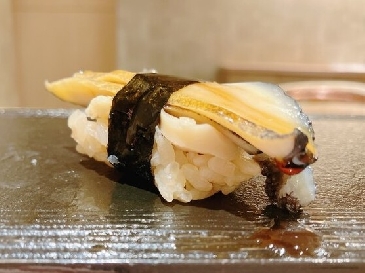

Ezo abalone (Ezo awabi)
【Nigiri sushi: Kai】
Ezo abalone (Ezo awabi, Haliotis discus hannai) is highly regarded as a neta for nigiri sushi, whether served raw or steamed. When served raw, the meat is firm, so it is typically sliced thinly using the “sogi-giri” (diagonal slicing) technique. Meticulous knife work—such as “ha-uchi” (tapping the surface with the blade) and “nami-giri” (wavy slicing)—creates a harmonious balance with the vinegared rice. This delicate preparation brings out a pleasant chewiness and a rich, briny flavor that beautifully complements the acidity of the vinegared rice, resulting in a refined nigiri sushi experience.
By contrast, Ezo awabi nigiri served steamed offers a different kind of appeal. Heating softens the meat, and with each bite, an elegant sweetness and concentrated umami fill the palate.
At sushi restaurants, it is not uncommon to see steamed Ezo awabi thinly sliced and served as nigiri, often paired with a reduced broth or a sauce made from the abalone liver. While raw nigiri allows diners to enjoy a pleasant texture and the aroma of the sea, steamed Ezo awabi nigiri offers a soft texture and deep richness, providing two distinct and equally appealing experiences.
Furthermore, whether served raw or steamed, adding the rich abalone liver to the nigiri further enhances its umami.
【Related contents】
Abalone around the world
What is Tokobushi abalone sushi?
List of Shellfish (Kai)
(Updated June 19, 2026)
Main production area
Hokkaido Iwate Miyagi
Famous production area
Ezo abalone, now mainstream in sushi, is prized for its rich liver and firm texture. Often farmed, it's a refined choice steamed or served raw.
Season
Late autumn-Winter