

Fish roe
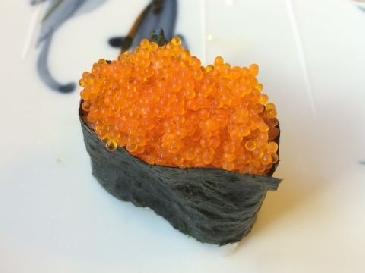
Flying fish roe (Tobiko)
【Nigiri sushi: Gyoran】
Tobiko is a processed food made by coloring flying fish roe. The grains are about 1–2 mm in size, and it is valued more for the popping texture it creates when chewed than for its flavor. Since natural flying fish roe is pale yellow, it is easy to color; in addition to the standard orange variety, green versions (wasabi- or jalapeño-flavored) and black versions (squid ink–flavored) are also produced.
Originally, tobiko was used as a garnish for chirashi sushi. However, because it is more affordable than fatty tuna or sea urchin, it has become a standard sushi ingredient widely used in conveyor-belt sushi restaurants. Its moderate saltiness pairs well with sushi rice and nori, and it is commonly served as gunkan-maki.
Much of the flying fish roe used to make tobiko is processed into dried or salted products in Taiwan, Indonesia, Peru, and other countries before being exported to Japan. Meanwhile, many species of flying fish inhabit the waters around Japan, and domestically produced tobiko made from their roe is also available. The texture of tobiko is somewhat similar to that of herring roe (kazunoko), which was once widely available in Japan.
In recent years, flying fish catches have become unstable due to changes in sea temperatures and fluctuations in fishing grounds. Furthermore, a combination of factors—including rising global demand for seafood, the weak yen, and increases in refrigeration, freezing, labor, and energy costs—has led to a sharp rise in the prices of processed fish roe products overall at the Toyosu Market.
In addition, soaring salmon roe prices have increased demand for tobiko. Restaurant chains and conveyor-belt sushi restaurants are increasingly using tobiko as a substitute for salmon roe because it adds a visually appealing touch to their dishes.
Outside Japan, tobiko is commonly used in sushi rolls and creative sushi dishes. In contrast, it is rarely seen in traditional or high-end sushi restaurants in Japan. Today, it is primarily a popular ingredient at conveyor-belt sushi restaurants and casual sushi establishments.
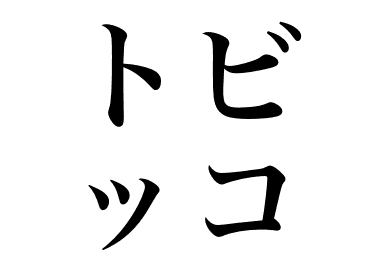
It should also be noted that “Tobikko” was originally a registered trademark owned by Kanetoku, a seafood processing company in Ashiya City, Hyogo Prefecture. The term became widely recognized as the brand name for the company’s processed flying fish roe products. However, it is now frequently used generically within the sushi industry and seafood markets, and even at the Toyosu Market it is commonly referred to as “tobiko.”
【Related contents】
What’s the difference between Tobiko and Masago?
What is Flying fish (Tobiuo) sushi?
List of Nimono, Gyoran and Others
(Updated May 23, 2026)
Main production area
Shimane Kyoto Nagasaki
Season
Summer to Early autumn