

Silver-skinned
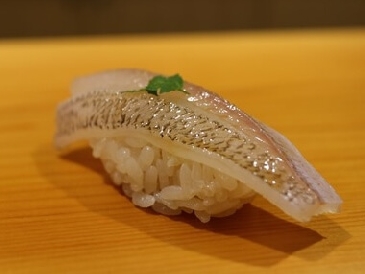

Japanese whiting (Kisu)
【Nigiri sushi: Hikarimono】
Generally, when people say “kisu,” they are referring to Shirogisu (Japanese whiting). It has a long history as a sushi topping; in Edomae sushi, locally caught kisu was often marinated in vinegar and used for nigiri.
As a typical summer sushi topping, its defining characteristic is a mild yet deeply rich umami flavor. To bring out this flavor, the thin skin on the back is usually left intact, and the fish is prepared either by vinegar curing or kelp curing. Because it is a small fish, one fish typically yields about two pieces when prepared as a half fillet, or one piece when served whole.
Lightly curing it with kelp enhances its umami and creates a wonderful harmony with the rice. However, since Japanese whiting is small and has delicate flesh, thinly sliced kelp is used for curing. Using thick kelp can draw out too much moisture from the fish and may result in the kelp’s aroma overpowering it. For this reason, the kelp is sometimes applied only to the flesh side.
In recent years, more sushi restaurants have begun removing the skin and serving the fish raw. Compared to kelp-cured versions, this method highlights a more delicate, translucent flavor, allowing diners to enjoy a gentle sweetness and crisp texture. Additionally, some chefs incorporate oboro (which is made by grinding white fish or shiba shrimp, seasoning it, and cooking off the moisture) to complement its mild flavor. It begins to appear in spring and is highly regarded among sushi connoisseurs as a premium summer topping.
【Substitute fish】
Although closely related species, such as Silver whiting, are imported from Australia, they have a slightly darker body color and do not match the visual appeal of Japanese whiting. It is worth noting that the target fish for “stepladder fishing,” once common in Tokyo Bay, is blue whiting. While it is now a rare catch, Japanese whiting is generally considered to have superior flavor.
Related contents:
List of Silver-skinned fish (Hikarimono)
(Revision date: May 30, 2026)