

Fish roe
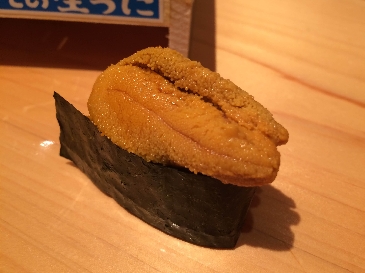
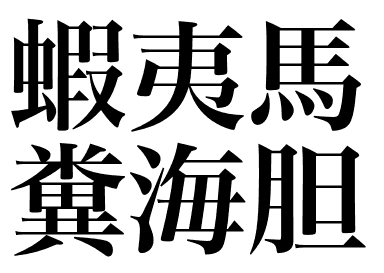
Short-spined sea urchin (Ezobafun uni)
【Nigiri sushi: Gyoran】
What is Ezobafununi?
Ezobafun uni (Short-spined sea urchin) is distributed in the Tohoku region to Hokkaido from the intertidal zone to depths of up to 70 m. Their shell diameter is approximately 5 cm. The spines are short. The appearance varies in color, ranging from grayish brown, yellowish brown, and dark green. The spawning season is from July to October. Incidentally, “Ezo”is a term used by successive central governments since the Yamato court to refer to the people living in the eastern and northern parts of the Japanese archipelago (present-day Tohoku region and Hokkaido).
Ezobafununi is found throughout Hokkaido and the Northern Four Islands, but is mainly caught in Kushiro, Hamana, Nemuro, and the Northern Four Islands. In Hamana Town on the Pacific coast, aquaculture is also actively practiced. Ezobafununi can also be caught in Funka Bay and Shakotan, but the quantities are significantly smaller compared to the eastern part of Hokkaido, and distribution is limited.
What does Ezobafun uni (Short-spined sea urchin) nigiri sushi taste like?
The short-spined sea urchin (Ezobafun uni) is considered one of the finest types of sea urchin, both in terms of taste and price. Each cluster melts in your mouth, allowing you to savor its rich sweetness and deep, full-bodied flavor. It is also characterized by its vivid, deep orange color, which hints at its rich flavor.
Compared to the Northern sea urchin (Kitamurasaki uni), the Ezo Bafun uni is often praised for its stronger sweetness and richer depth of flavor, while the Kitamurasaki uni is prized for its elegant and delicate taste. However, this impression can vary significantly depending on how it is paired with the sushi rice. The sweetness and umami of Ezo Bafun sea urchin harmonize well with rich sushi rice blended with red vinegar or slightly warm sushi rice. On the other hand, the delicate sweetness and refined aroma of Kitamurasaki sea urchin may stand out more prominently when paired with refreshing sushi rice made primarily with rice vinegar.
Ezo Bafun sea urchin also pairs well with dry champagne. The champagne’s delicate bubbles and acidity complement the sea urchin’s rich umami, naturally leading your chopsticks to the next piece. Needless to say, it pairs perfectly with sake as well.
While it was once used as an ingredient in high-end processed sea urchin paste, advancements in distribution and refrigeration technology now allow most of it to be delivered to sushi restaurants as whole sea urchins or “itauni” (sea urchin in a wooden tray), ensuring it is served fresh.
However, much of the “itauni” available on the market is treated with alum to preserve its shape and color. As a result, although it is very subtle, you may detect a distinctive bitterness. On the other hand, in recent years, additive-free itauni—made without alum—has become available, allowing consumers to enjoy a more natural flavor. Additionally, “saltwater sea urchin”—in which the sea urchin is removed from its shell, soaked in brine with a salinity nearly identical to seawater, and then packaged—is also highly regarded. Its appeal lies in the fact that, because it undergoes no unnecessary processing, you can enjoy a natural sweetness and flavor that is very close to that of freshly caught sea urchin.
【What is the difference between Short-spined sea urchins and Green sea urchins?】
While they are very similar to Green sea urchins (Bafun uni), Short-spined sea urchins (Ezobafun uni) are a size larger and have thick spines. Green sea urchins are 5cm in diameter and Short-spined sea urchins are 10cm in diameter. Green sea urchins are distributed from the southern areas of Hokkaido down to Kyushu. Short-spined sea urchins are mainly distributed in the Hokkaido and Tohoku areas. The most commonly eaten green sea urchins that are Short-spined sea urchins.
【Aquaculture of hamanaka Ezobafun uni】
Hamanaka Farmed Uni is produced from Ezobafun Uni (Strongylocentrotus intermedius), a species highly prized in Japan.
At first glance, Hamanaka may seem similar to many other sea urchin-producing regions in Hokkaido, where artificial seed production and sea urchin enhancement programs have been practiced for decades. However, there is an important difference.
In most regions, hatchery-produced juvenile sea urchins are released into the wild to help replenish natural stocks. This approach is known as stock enhancement, and the sea urchins are later harvested as wild-caught products.
Hamanaka follows a different model. Rather than releasing juveniles into the ocean, producers raise them under carefully controlled conditions until they reach market size. In other words, the goal is not simply to increase natural resources, but to produce a premium-quality commercial product.
Another key feature is the feed. Hamanaka is located in one of Japan’s renowned kelp-producing areas, and the sea urchins are fed high-quality local kelp throughout the cultivation process. This controlled diet helps create consistently full gonads with a rich, sweet flavor, smooth texture, and remarkably uniform color and size.
The region has also established an integrated production system that covers every stage of cultivation—from spawning and seed production to grow-out and harvest. This allows producers to maintain strict quality control throughout the sea urchin's entire life cycle.
For sushi chefs and sea urchin enthusiasts, Hamanaka Farmed Uni represents more than simply farmed sea urchin. It is a carefully cultivated expression of Hokkaido’s kelp-rich marine environment, designed to deliver exceptional consistency, sweetness, and quality throughout the year.
【Temperature of vinegared rice (shari) and sushi toppings】
34~36℃/15~18℃
【Main area/season】
Shikotan: Summer
Rishiri and Rebun Islands: June to August
Teuri and Yagishiri Islands: July to August
Hamanaka Aquaculture: October to early spring
Funka Bay: Temporarily available in winter
Kushiro・Hamanaka・Nemuro・the Northern Four Islands: October to early summer
Rausu: January to June
Oumu: April to June
Hidaka and Erimo: March to May
【Famouos Manufacturers】
Well-known brands such as Hamanaka Ogawa Suisan, Maruki Hirakawa, Kiritappu Suisan, and Kaneki Kimura Suisan have their headquarters in Hamanaka Town. In Nemuro, there are top-tier manufacturers such as Kaneyo.
【Related contents】
Global sea urchin resources
What is uni sushi?
Why is it that sea urchin sushi can taste bitter?
List of Nimono, Gyoran and Others
(Revision date: June 25, 2026)
Main production area
Hokkaido Aomori Iwate
Famous production area
Season
Spring-Summer