

Red flesh
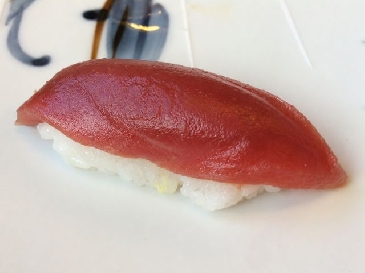
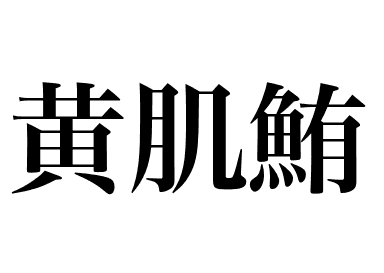
Yellowfin tuna (Kihada maguro)
【Nigiri sushi: Akami】
What is Kihada maguro?
Kihada maguro is found over a wide area in the tropics and temperate regions. The ideal water temperature for Kihada meguro is 20 to 28°C, which is higher than Mebachi maguro, so most fishing spots are concentrated in the seas around 25 degrees latitude where they swim at the sea’s surface level. As the name “kihada” means “yellow skin”, the fish is characterized by its yellow color. The yellow dorsal fin and tailfin grow long when the fish is an adult. This is the most commonly fished tuna and there are ample resources. Kihada maguro accounts for over 30% of the tuna consumed in Japan and it is used for sushi toppings, sashimi and processed goods.
Yellowfin tuna has no part equivalent to toro and is relatively low in fat. Consequently, its light and refined flavor makes it a fish you never tire of eating. In Hawaii, it is known as “ahi” and is a popular sushi topping. Furthermore, in Osaka—where people tend to prefer lighter flavors—the term “maguro” (tuna) often refers to yellowfin tuna. The name changes depending on the fish's size: those weighing 15 kg or less are called “kimeji,” while those weighing between 15 kg and 25 kg are called “kokiwa.”
Its peak season is summer, and as a seasonal sashimi fish, it is sometimes valued even more highly than bluefin tuna, alongside bigeye tuna. Although it is not as fatty as bluefin tuna or southern bluefin tuna and its flesh is a paler shade of red, it is known for retaining its color better than other red-fleshed tuna species.
However, in the Tokyo market, there is a tendency to favor tuna with deep red flesh and rich fat content for sushi and sashimi. Because yellowfin tuna has slightly paler flesh and less fat, it is often rated somewhat lower as a sushi ingredient than bigeye tuna or bluefin tuna.
That said, large yellowfin tuna—unlike the smaller individuals caught in equatorial waters—can sometimes develop a rich layer of fat. Such high-quality specimens are occasionally referred to as “abura-kihada” (“fatty yellowfin”) at markets such as Toyosu and are highly prized by upscale sushi restaurants. Their main fishing grounds are found in the warm waters influenced by the Kuroshio Current, and supplies increase in Japanese coastal waters from summer through autumn.
【Related contents】
Types of tuna
You know toro tuna and akami, but have you heard of the more rare parts of the tuna?
Do you know what kind of Tuna you’re eating at a sushi restaurant?
List of Red flesh fish (Akami)
(Revision date: May 26, 2026)
Main production area
Shizuoka Miyagi Kochi Miyazaki
Season
Summer