

Silver-skinned
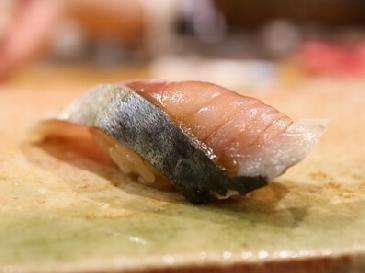
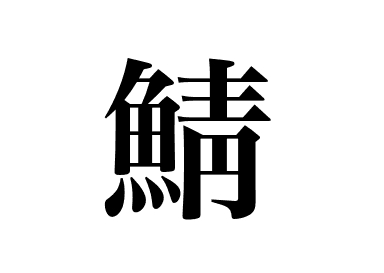
Mackerel (Saba)
【Nigiri sushi: Hikarimono】
What is Saba?
Saba is a migratory cold-sea fish that moves north along the Japan coast rom spring to summer while laying eggs, then migrates south again from autumn to winter.
There are so many “designer” mackerel, that it’s impossible to remember them all, including “Sekisaba” from the Bungo Channel, “Shunsaba” from the Goto Islands, “Misakisaba” from the Hoyo Strait, “Kinkasaba” from the Kinkazan open seas in Miyagi Prefecture, and “Ougonsaba” from Matsuwa. Sekisaba has a similar appearance to Aji and the taste is refreshing, while Kinkasaba is large with ample fat. Ougonsaba has a balanced fat distribution throughout the body and the meat is soft so it conforms well to Shari.
The designer mackerel is caught using the traditional Ipponzuri (Catching fish with fishing poles). The fisherman are extremely careful not to touch the mackerel as this can cause it to spoil more quickly, and they handle the fish so as to assure the utmost freshness.
【The taste of mackerel nigiri sushi】
Mackerel has long been prized for its rich fat content and deep umami, yet it is also a fish that spoils quickly. For this reason, sushi restaurants traditionally prepare it as shime saba—mackerel cured with salt and vinegar. Today, it remains one of the most iconic blue-backed fish in Edomae sushi. Salt and vinegar help suppress bacterial growth and slow spoilage, while also reducing trimethylamine, the compound responsible for fishy odors, and inhibiting histamine production. Through this process, shime saba becomes both delicious and safe to enjoy.
Although the curing process does not greatly alter the moisture or fat content of the fish, the vinegar softens the richness of the fat and gives the flavor a cleaner, more refined character. The taste and texture vary depending on the degree of curing. Lightly cured mackerel retains a melt-in-your-mouth texture and highlights the luscious sweetness and umami of the fat. More firmly cured mackerel develops a tender yet slightly tighter texture, creating a beautiful balance with the vinegared rice.
In some sushi restaurants, shime saba nigiri is topped with thin strips of white kombu simmered in a sweet-and-sour sauce. The gentle sweetness of the kombu mellows the sharpness of the vinegar and harmonizes with the saltiness of the fish, further enhancing the sweetness of the mackerel’s fat.
In recent years, improvements in distribution and preservation techniques have made raw (Here, "raw" means never frozen) mackerel nigiri is increasingly common. Fresh mackerel offers a uniquely creamy texture and powerful umami, but because of the risk of parasites such as anisakis, meticulous freshness control and careful preparation remain essential.
Mackerel harvested during the cold months, when it has accumulated abundant fat, is especially prized for sushi. The moment it touches the tongue, the sweetness of the fat and the rich umami characteristic of blue-backed fish spread across the palate, leaving a long, satisfying finish. Both shime saba and nama saba possess their own distinct appeal, and each continues to captivate sushi lovers as one of winter’s defining sushi delicacies.
Also called Chub mackerel or Slimy mackerel or Thimbel-eyed mackerel.
【Temperature of vinegared rice (shari) and sushi toppings】
36℃/20~23℃
【Trivia】
Mackerel contains an ingredient called histidine. As the mackerel decays, its histidine is converted to histamine. Histamine is a toxin and it can cause urticaria, difficulty breathing from anaphylactic shock and other problems, so caution should be taken. This is why the osmotic pressure of salt is used, and the component can be removed in around two hours. This is called “shiojime”.
【The difference between masaba (真鯖) and saba (鯖)】
The “Ma” in the name of a fish or shellfish indicates that it is the most representative, superior, or valuable among the many related species. The Chinese character “真” means “genuine. Therefore, at sushi restaurants,‘masaba’and‘tai’refer to the same species.
【Related contents】
Where does the name “battera” come from?
Why are two pieces of nigiri sushi made at once?
What is Sekisaba?
What is Blue mackerel (Gomasaba) sushi?
What is Warisu?
What is Sujime?
What is Ikekoshi?
Atlantic mackerel (Taiseiyosaba)
List of Silver-skinned fish (Hikarimono)
(Revision date: May 16, 2026)
Main production area
Shizuoka Mie Nagasaki
Famous production area
Season
Autumn-Winter