

Silver-skinned
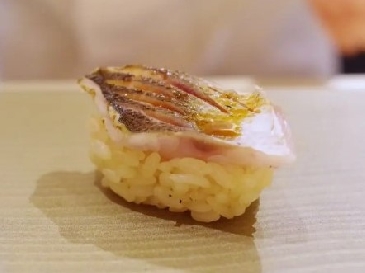
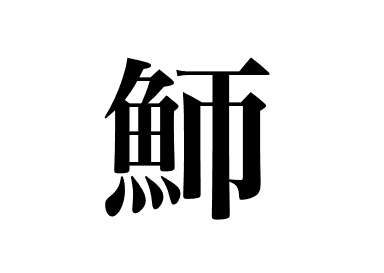
Red barracuda (Aka kamasu)
【Nigiri sushi: Shiromi】
There are two main types of barracuda commonly found in the market: Yamato kamasu (Japanese barracuda) and Aka kamasu (Red barracuda). Aka kamasu, which is considered to have a superior flavor, is often used as a sushi topping. Yamato kamasu is less fatty and has a higher moisture content than aka kamasu, so it is relatively inexpensive and is often processed into dried fish and other products.
Aka kamasu is generally called “kamasu” or “hon-kamasu,” while yamato kamasu is referred to as “mizu-kamasu” or “ao-kamasu.” In markets and other settings, both are sometimes referred to simply as “kamasu” without distinction.
Aka kamasu is a white-fleshed fish with a mild flavor. Because its flesh has a high moisture content of 70–80%, it is generally better suited for grilling than for eating raw. When preparing it as a sushi topping, the key is to lightly salt it to draw out excess moisture. Since much of the umami is found in the skin and the layer just beneath it, leaving the skin on when making sushi and lightly searing* it allows you to enjoy the skin’s toasty aroma and the umami of the flesh. Kamasu caught in the fall, when it is particularly rich in fat, is considered especially delicious. It is also excellent when marinated in kelp to bring out its refined umami.
* A cooking method of grilling fish fillet with a little bit of skin left, over high heat for a short time and cooling it down. Its purpose is to transfer the roasted skin fat into the meat. Used mainly for fish with thick and hard skin, like Mackerel (Saba) and Chicken grunt (Isaki).
It is also called Brown barracuda.
【What is Barracuda】
Kamasu (Red Barracuda) is found from the southern region Sea of Japan coasts to the South China Sea, except Okinawa. They grow up to 40 cm in length. It is elongate and cylindrical, with a long head and sharp teeth.
【Related contents】
Japanese barracuda (Yamatokamasu)
(Revision date: September 8, 2026)
Main production area
Toyama Kanagawa
Famous production area
Season
Late autumn - Early winter