

Others
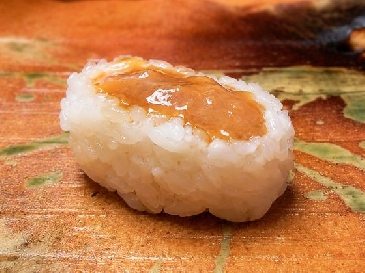

Salted sea cucumber intestines (Konowata)
For konowata nigiri sushi, the vinegared rice is shaped into a shallow, bathtub-like form, and a carefully measured amount of konowata is placed in the center to achieve a good balance of flavors. Generally, however, konowata is served as gunkan-maki to prevent it from spilling out.
What makes this nigiri particularly noteworthy is that the sushi chefs themselves prepare the konowata, a labor-intensive and time-consuming process. Konowata (sea cucumber intestines) is a delicacy made by salting and aging the intestines of sea cucumbers. It is primarily produced in areas such as Nanao City and Anamizu Town on the Noto Peninsula and is prized as a high-end accompaniment to sake, with its distinctive briny aroma and rich umami flavor.
The mellow acidity of the vinegared rice blends with the rich umami and pronounced briny aroma of konowata to create an exquisite flavor. The sushi chef’s skill and dedication are evident in the careful preparation of the konowata and the way it is shaped into nigiri sushi.
Incidentally, both konowata and bachiko are delicacies made from sea cucumbers, but they come from different parts of the animal. Konowata is made from the salted intestines and is characterized by its rich briny flavor and saltiness. Bachiko, on the other hand, is made from the sea cucumber’s ovaries, which are salted and dried, resulting in a distinctive texture and rich umami flavor.
(Posted November 11, 2026)
Main production area
Ishikawa
Season
Winter