

White flesh
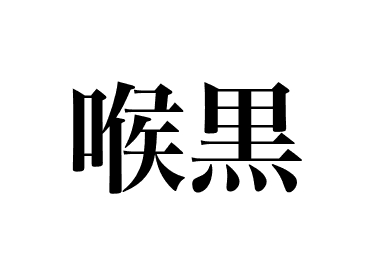
Blackthroat seaperch (Nodoguro)
【Nigiri sushi: Shiromi】
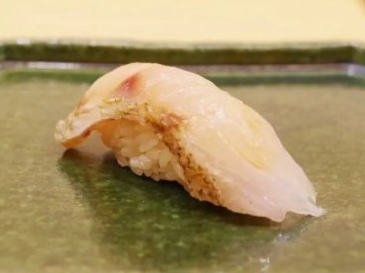
The blackthroat seaperch (Nodoguro) is a premium fish also known as the “red gem” because of its beautiful, vivid red color. Its tender flesh, combined with the refined flavor typical of white-fleshed fish and its rich, fatty quality, has made it increasingly popular in recent years. Although it is a white-fleshed fish, it is exceptionally rich in fat, and its flavor is sometimes described as “the toro of white-fleshed fish.” Its texture is another unique attraction, as the tender flesh and rich fat melt away almost instantly in your mouth.
When preparing it as sushi, we recommend briefly searing it before making the nigiri. Since nodoguro has firm skin, searing softens its texture, so it does not linger in the mouth. The searing also releases a toasty aroma, while the fat between the skin and flesh rises to the surface, making it easier to appreciate the natural sweetness of the fat.
In traditional Edomae sushi, fatty fish were not commonly used as sushi toppings like toro. For fatty fish like nodoguro, therefore, searing helps reduce some of the excess fat and mellow its richness, allowing it to pair better with vinegared sushi rice.
Of course, you can still fully savor the fish’s natural umami when it is served raw. It pairs well with a variety of seasonings, such as grated daikon radish with chili pepper and ponzu, salt and wasabi, or salt and sudachi. It is best to order it according to your preference.
Finally, here is a little anecdote that reflects the experience of sushi chefs. Line-caught fish can sometimes cost more than ¥10,000 per kilogram. By contrast, fish caught by bottom trawling in the Sea of Japan can have excellent fat content, but their scales are easily damaged or lost during fishing, and their flesh tends to be softer, making them less expensive than line-caught fish. For this reason, many sushi restaurants prefer line-caught fish because of their superior texture and appearance.
However, some sushi chefs appreciate the flavor of bottom-trawl-caught fish despite their less-than-perfect appearance and deliberately seek them out. This may be where a sushi chef’s skill truly shines, because knowing how to prepare such fish is essential to bringing out the best of its flavor.
【Temperature of vinegared rice (shari) and sushi toppings】
36~38℃/25~27℃
【What is nodoguro】
Nodoguro is found in the Pacific Ocean around the Boso Peninsula, in the Sea of Japan from Niigata Prefecture southward, and in Indonesia. It can grow to 30 cm in length and inhabits inshore reefs. In recent years, regional brand names have been established for Blackthroat Seaperch, including “Donchitchi-nodoguro” in Shimane Prefecture and “Benihitomi” in Nagasaki Prefecture, reflecting its growing popularity.
【Another preparation】
Yubiki should be done when you want to make use of the umami beneath the skin or soften the skin itself. It is important to pour boiling water over the skin several times and then immediately place it in ice water to remove the heat and let it cool.
【Trivia】
The black throat of the Nodoguro (Blackthroat seaperch) is its most distinctive feature. The reason for the black throat is the food that the Nodoguro eats.It is carnivorous and eats small animals and fish that live in the deep sea, and these small animals often have luminescent properties.
When the Nodoguro prey on these small animals, they struggle violently inside the body and emit a strong light. If the light leaks out of the digestive tract at this time, there is a possibility that they will be spotted by a larger enemy. For this reason, it is said that they blacken their peritoneum so that the light does not leak out.
【Substitute fish】
Patagonian Toothfish (Majeranainame): Dissostichus eleginoides Smitt, 1898
【Related contents】
What is Pacific barrelfish (Medai) sushi?
List of White flesh fish (Shiromi)
(Revision date: August 12, 2026)