

White flesh
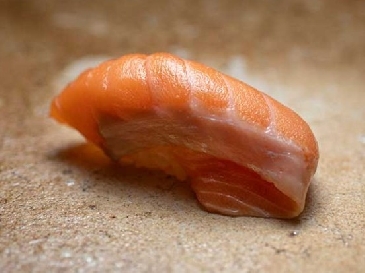
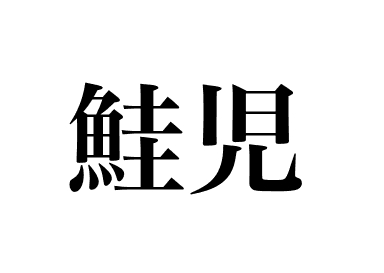
Chum salmon Keiji (Keiji)
【Nigiri sushi: Shiromi】
Chum salmon, known as “Sake” in Japan, hatch in rivers in Hokkaido and parts of Tohoku along the Pacific coast of Japan. They spend about four years at sea before returning to their natal rivers to spawn. In Japan, “Sake” generally refers to chum salmon. Because they are caught when they return to the rivers to spawn from September to November, they are also called “Akizake,” or autumn salmon.
Keiji are young chum salmon with a high fat content, believed to originate from the Amur River in Russia. They are caught during their migration from the Shiretoko Peninsula toward the Abashiri area. As salmon migrate upstream to spawn, they expend much of their stored energy and eventually die after spawning. Because Keiji are still growing and have not yet entered the spawning stage, their ovaries and testes are immature. As a result, they retain more fat than ordinary chum salmon. The catch is estimated at only one or two Keiji for every 10,000 ordinary chum salmon, making them exceptionally rare.
Keiji nigiri is characterized by its high fat content and distinctive aroma, which set it apart from typical chum salmon. It has less of the fishy odor commonly associated with salmon, while its fat provides rich umami and sweetness, along with a smooth texture. Furthermore, the flavor varies depending on the cut. Some sushi chefs note that the belly has a rich, savory flavor from its abundant fat, while the back has a more pronounced aroma that allows the distinctive characteristics of Keiji to be appreciated. This combination of rich fat, sweetness, and aroma gives Keiji its distinctive flavor.
Some high-end sushi restaurants in Sapporo serve Keiji. In Tokyo, Keiji is served by only a few sushi chefs, mainly chefs from Hokkaido or chefs with ties to the region.
【Related contents】
Tokishirazu (Toki)
List of White flesh fish (Shiromi)
(Revision date: August 21, 2026)