

Squid and octopus
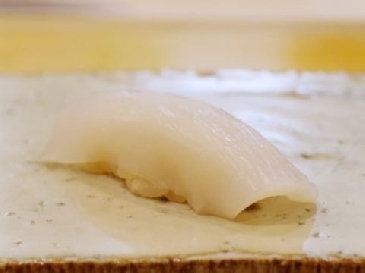

Kisslip cuttlefish (Kaminari ika)
【Nigiri sushi: Ika (Squid)】
What is Kisslip cuttlefish (Kaminari ika)?
The official name of Mongou ika is Kaminari ika, but the squid is commonly called Mongo, including sushi restaurants. Mongou ika lives in sandy mud at depths of 60~100m in the Central and Southern regions, the East China Sea, the Philippines, Thailand, etc. Its length is about 40cm.
Compared to cuttlefish, catches are smaller. The catch is high in early summer, but the meat is not as thick because of the spawning season, and the real season is in autumn. At this time of year, it is still small, tender, and sweet, making it a perfect sushi fish.
The name is said to come from the fact that it is often caught in areas where thunder is heard. Or it is said that it came to be called Kaminari ika because the season of thunder is in season. The other name, Mongou ika, means "cuttlefish with crests" because of the numerous eye-like patterns on its back.
In the past, it was caught in large numbers in bottom trawl fisheries in the East China Sea. In addition, European common cuttlefish caught in the Atlantic and Indian Oceans are sometimes sold under the name Mongou ika in the market. Its scientific name is Sepia (Acanthosepion) lycidas Gray, 1849.
What does Kisslip cuttlefish (Kaminari ika) sushi taste like?
While Kaminari ika is not a common sushi topping in the Kanto region, it is widely known in western Japan and is regarded as a high-quality squid. Since sushi restaurants generally require it to be served alive or in an extremely fresh state, transporting it from fishing grounds in western Japan to the Kanto region entails high costs. Furthermore, because Sumi ika (a member of the same family) has traditionally been used in Edomae sushi, few sushi chefs make a special effort to source Kaminari ika.
As it grows, Kaminari ika develops a richer umami flavor. Although its flesh is thick, its texture remains tender, offering refined sweetness and an elegant finish. Its substantial flesh also lends itself well to kazari-bocho (decorative knife cuts), allowing sushi chefs to showcase their craftsmanship. If its firm texture is a concern, scoring the surface in a kanoko pattern can make it easier to eat while allowing its umami flavor to linger longer on the palate. It pairs well with lemon, salt, and white sesame seeds, and the wide range of possible accompaniments is another of its charms.
Also called Ocellated cuttlefish
【Substitute】
Common cuttlefish: Sepia offcinalis Linnaeus, 1758
Rhomboid squid: Thysanoteuthis rhombus Troschel,1857
Jumbo flying squid: Dosidicus gigas (Orbigny, 1835)
【Related contents】
Golden cuttlefish (Sumi ika)
List of Squid (Ika) and Octopus (Tako)
(Updated June 15, 2026)
Main production area
Seto Inland Sea Kyushu
Season
Autumn