

Shellfish
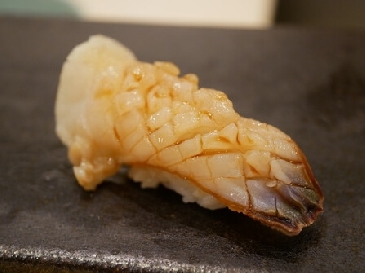
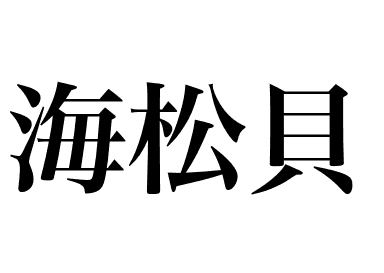
Mirugai clam (Mirugai)
【Nigiri sushi: Kai】
What is Mirugai?
Markets often call this shellfish ‘mirugai,’ but the official name is ‘mirukui’. Mirukui dwell in sandy places in waters about 10 to 50 m deep in inner bays from Hokkaido down to Kyushu. The name is said to have come from green sea fingers (called “miru” in Japanese) that often stuck to shellfish’s siphons, making them look like they were eating the seaweed.
What does Mirugai (Keen's gaper) sushi taste like?
With Keen's gaper (Tresus keenae), known in Japan as Mirugai, the siphons—which protrude significantly from the shell—are used as sushi toppings. To prepare them, the siphons are briefly blanched in hot water and then rinsed in cold water. The dark brown skin is carefully peeled away before the siphons are split lengthwise. After being thoroughly rinsed and cut into portions, they are served either raw as sushi or lightly blanched. When blanched, the tips of the flesh take on a pale reddish-purple hue, creating both an attractive appearance and a distinctive texture.
Mirugai is regarded as one of the finest shellfish used for sushi. It is prized for its pleasantly crisp texture, refreshing briny aroma, and juicy sweetness. On the other hand, some people find its pronounced ocean-like aroma too strong, making it a sushi topping with a distinctive character. It was once harvested in abundance from Tokyo Bay, which was historically one of Japan's richest shellfish grounds, and has long been cherished as one of the signature toppings of Edomae sushi.
In recent years, however, declining catches have made wild Mirugai increasingly rare. To distinguish it from species such as the Japanese geoduck (Panopea japonica), it is sometimes referred to as Hon-miru ("true Mirugai") or Kuro-miru ("black Mirugai"). Meanwhile, the Japanese geoduck, which has a white siphon, is marketed as Shiro-miru ("white Mirugai"). Although it was once regarded as a substitute for Mirugai, Shiro-miru is now highly valued for its unique texture and refined sweetness and has established itself as a distinct sushi topping in its own right.
In addition, many conveyor-belt sushi restaurants serve the Alaskan geoduck (Panopea generosa) as "Mirugai." In the seafood market, Shiro-miru is relatively affordable, whereas Hon-miru commands exceptionally high prices because of its scarcity. As a result, wild Hon-miru is considered a premium sushi topping served almost exclusively at high-end sushi restaurants.
【Substitute fish】
Panopea generosa (Gould,1850)
【The meaning of Hon】
The marketer adds the prefix Hon (本) in the name of a fish or shellfish to avoid confusion with a substitute. One of the meanings of the Japanese word "hon" is "genuine," so this may have something to do with it.
【Related contents】
What is Shiromiru?
List of Shellfish (Kai)
(Revision date: July 22, 2026)
Main production area
Aichi Mie Seto Inland Sea
Famous production area
Season
Winter-Spring