

Fish roe
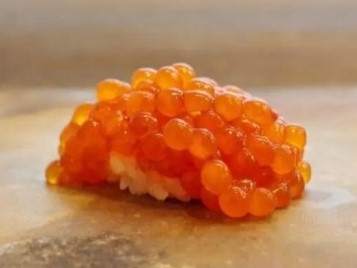
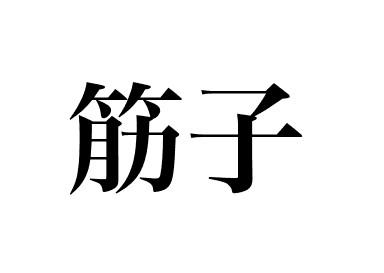
Salmon roe in ovarian membrane (Sujiko)
【Nigiri sushi: Gyoran】
Sujiko is salmon or trout roe that has been salted while still enclosed in the ovarian membrane. It is called sujiko because the eggs remain connected in a string-like form (suji). Since immature eggs are used to make sujiko, the eggs are smaller than those of ikura, which is made from mature roe.
Note that if you describe it as “salted salmon roe,” it will be interpreted as ikura; therefore, you must specify that sujiko refers to fish roe salted while still enclosed in its ovarian membrane.
Like salmon roe, there are two ways of seasoning sujiko. One is the traditional method of salting, which brings out the umami flavor of the roe. The roe is salted to preserve and finish the process. Freshness is the key to making good sujiko, so when the roe is processed immediately after the fish are caught, less salt is needed, and the finished sujiko is more flavorful. However, if roe that has been left for some time is used, more salt is needed, resulting in a stronger salty taste and a loss of texture.
Recently, soy sauce marinating has become a popular way of seasoning sujiko. For this method, soy sauce that does not discolor the sujiko is used. I think this is the reason sushi made with sujiko came about. People familiar with old-fashioned sujiko recognize it as a very salty preserved food, and it is easy to imagine that such a food would not pair well with vinegared rice.
【Related contents】
What is the difference between Ikura and Sujiko?
List of Nimono, Gyoran and Others
(Updated September 10, 2026)
Main production area
Hokkaido Alaska Russia Scandinavia
Season
Autumn