

White flesh
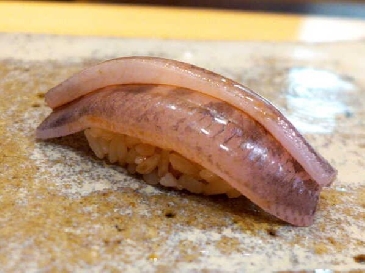

Bigeyed greeneye (Mehikari)
【Nigiri sushi: Shiromi】
Compared to the names of common edible fish such as “tai” and “aji,” the name “eso” does not sound particularly appetizing to Japanese people. This is because the pronunciation of “eso” evokes the Japanese word “gangrene.”
“Aomeeso,” the standard Japanese name, is a combination of “Aome,” meaning “blue eyes,” and “Eso,” the name of a fish that is not widely known. Consequently, it is difficult to picture the fish or imagine its taste based on its name alone, making it difficult to convey its appeal as a food ingredient. On the other hand, this fish is also known by the alternative name “Mehikari.” This name derives from the fish’s distinctive shining eyes and is more approachable than “Aomeeso,” giving the fish a more appealing image as a culinary ingredient.
Although its appearance may not suggest it, mehikari (Chlorophthalmus albatrossis, Bigeyed greeneye) is a delicious fish with mild white flesh and a flaky texture. It is primarily caught using bottom trawl nets, but because it spoils easily, it must be processed quickly after being landed to preserve its freshness. Furthermore, the volume distributed as fresh fish is limited, so opportunities to enjoy it as sashimi or nigiri sushi outside its region of origin are rare.
At sushi restaurants, mehikari is often lightly seared or cured with kombu before being served as nigiri sushi. Some restaurants also prepare their own one-night-dried mehikari and serve it as a snack to accompany sake. Particularly large, fresh specimens tend to command high prices.
In the past, mehikari was sometimes regarded as an underutilized fish and used primarily as feed for farmed fish. However, in recent years, its value as a culinary ingredient has been reevaluated. At restaurants such as Sushi Ito in Iwaki City, Fukushima Prefecture, mehikari has become a signature sushi topping. This shift in perception is likely related to the growing emphasis on fat content as an indicator of fish quality and flavor. As a result, deep-sea fish that accumulate fat are also attracting attention.
Aside from sushi, common ways to enjoy mehikari include dried fish, deep-fried fish, and tempura. Its mild, fatty white flesh retains a fluffy texture even when cooked. Additionally, because its skin is soft, the entire fish, including the head and bones, can be eaten when deep-fried.
【Related contents】
List of White flesh fish (Shiromi)
(First post on November 6, 2026)
Main production area
Fukushima Ibaraki
Season
Winter