

White flesh

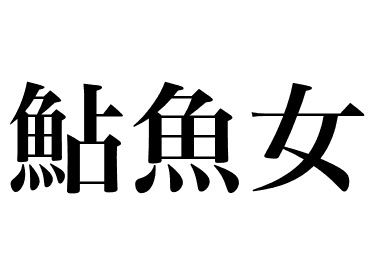
Fat greenling (Ainame)
【Nigiri sushi: Shiromi】
Fat greenling (Ainame) has a rich sweetness and savory, fatty flavor that you wouldn’t expect from a whitefish, yet it leaves a clean, refreshing aftertaste. When served as nigiri sushi, its distinctive qualities are fully expressed, making it an outstanding sushi topping. Since it loses its freshness quickly, the opportunity to enjoy it as nigiri is a rare treat. The skin is also rich in umami, making the fish excellent when prepared as yakishimo zukuri* (lightly seared on the skin side). Searing the skin adds a toasty aroma, making the nigiri even more delicious. To bring out the fish’s natural flavor, we recommend eating it with salt, although ponzu sauce also pairs well with it.
Although Ainame is sometimes sold as nojime (killed without special processing) or ikejime (killed using a specialized technique), it dies relatively quickly after being caught. For this reason, sushi restaurants often use live Ainame shipped from regions such as Aomori and Miyagi prefectures and Hokkaido. This contributes to its high price.
When preparing fat greenling as sashimi, it may be necessary to score the flesh to cut through the small bones, much as is done with conger eel. However, unlike with conger eel, the purpose is not simply to cut through the bones. Fat greenling has firm, dense flesh and tough skin, so scoring the flesh also helps release its tension, making it easier to eat. Furthermore, blanching the fish brings out the distinctive umami of its skin. It also gives the flesh a lighter texture and makes it look fluffy and more voluminous.
*A cooking method of grilling fish fillet with a little bit of skin left, over high heat for a short time and cooling it down. Its purpose is to transfer the roasted skin fat into the meat. Used mainly for fish with thick and hard skin, like Mackerel (Saba) and Chicken grunt (Isaki).
【Also known as】
Fat cod
【What is Ainame】
Ainame (Fat greenling) is distributed throughout Japan, the southern part of the Korean Peninsula and along the coast of the Yellow Sea. They grow to 40 cm in length and live in shore reefs. During spawning season, the male's body turns bright yellow and he establishes a territory to watch over the eggs laid by the female until they hatch.
It can be caught all over Japan throughout the year, but spring and summer are the best times to catch them. The spawning season occurs from fall to winter, during which time the taste of the fish drops.
【Substitute fish】
Coryphaenoides pectoralis (Gilbert, 1891)
Coryphaenoides longifilis
【Related contents】
List of White flesh fish (Shiromi)
(Previous revision date: May 16, 2025; Current revision date: October 26, 2026)
Main production area
Hokkaido Aomori Ibaraki Chiba Iwate
Season
Spring-Summer