

Prawn and crab
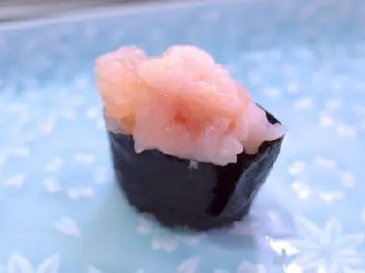

Japanese spiny lobster (Ise ebi)
【Nigiri sushi: Ebi/Kani】
In Japan, the Japanese spiny lobster (Panulirus japonicus, ise ebi) holds a special place. With its impressive antennae, armor-like appearance, and vivid red color when boiled, it has long been regarded as an essential symbol of good fortune at celebratory occasions. Its curved back, which resembles that of an elderly person, has also made it a symbol of longevity.
Live ise ebi can be enjoyed as raw nigiri sushi or prepared using yushimo-zukuri (briefly blanched in hot water and then chilled in ice water) before being made into nigiri. Its vivid red color when heated also makes it visually striking as a piece of sushi. In addition, because the meat has a relatively high moisture content, some sushi chefs serve it after marinating it in kombu.
Ise ebi has a low edible yield, with approximately 60% of its total weight consisting of inedible parts. For this reason, it is often cooked whole, including the head and shell, rather than being served as meat alone. Considering this, using only the meat for nigiri sushi might seem somewhat wasteful.
However, ise ebi meat has a firm, springy texture and contains levels of glutamic acid, a key umami component, as well as glycine and arginine, which contribute to sweetness, comparable to those found in kuruma ebi. With this combination of umami and sweetness, ise ebi is well suited to nigiri sushi.
On the other hand, ise ebi is also expensive. At Toyosu Market, the wholesale price of domestically caught ise ebi fluctuates depending on the season but generally ranges from approximately 5,000 to 10,000 yen per kilogram. Furthermore, when ise ebi dies before reaching the market, it is classified as “agari” and its market value drops considerably.
Due to these pricing and freshness-management challenges, ise ebi is rarely served as nigiri sushi. It is more commonly used in Japanese and French restaurants than in sushi restaurants, although some sushi establishments have developed creative ways of incorporating it into nigiri sushi.
For example, at Hatsune Sushi in Kamata, one distinctive preparation involves sprinkling ise ebi with sake, combining its grilled and boiled portions, and adding shrimp miso before shaping it into nigiri. This creative presentation allows diners to appreciate not only the cooking process but also the distinctive character of ise ebi itself.
Incidentally, the name “ise ebi” is said to derive from the fact that it was once widely caught around the Ise Peninsula, which includes the Ise region. Although ise ebi caught in this area is reputed to have particularly good flavor, Chiba Prefecture currently accounts for the largest share of the domestic catch.
【Related contents】
List of Prawn (Ebi) and Crab (Kani)
(First post on November 10, 2026)
Main production area
Mie Chiba
Season
Autumn-Winter