

Shellfish
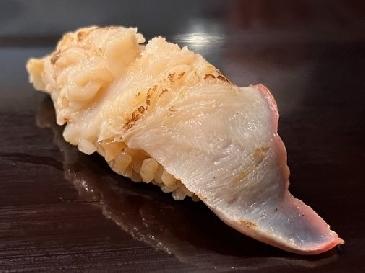
Sakhalin surf clam (Hokkigai)
【Nigiri sushi: Kai】
The official name of this shellfish is ubagai, but at fish markets it is commonly called hokkigai. Hokkigai doesn’t grow very quickly, taking 3 to 10 years to reach the 7–8 cm size required for sale. It has a long lifespan of 30 years or more. Hokkigai lives in sandy coastal areas from the Tohoku region northward and can be found along the coast from Hokkaido to Choshi in Chiba Prefecture.
The Sakhalin surf clam (Pseudocardium sachalinense), commonly known in Japan as Hokkigai, was not traditionally used as a topping for Edomae sushi. It only became widely available at sushi restaurants in Tokyo relatively recently, after the supply of sushi ingredients harvested from Tokyo Bay began to decline. In contrast, it has long been a favorite in the Tohoku region and Hokkaido, where it remains a highly popular sushi topping to this day. Characterized by its thick, substantial flesh and pleasantly crisp texture, Hokkigai has gained widespread recognition for its excellent flavor, leading to a surge in popularity nationwide in recent years.
The part primarily used as a sushi topping is the foot. When lightly blanched, the tips of the flesh, which are originally blackish, turn a vivid red, becoming sweeter while developing an even more appealing texture. Hokkigai is also sometimes served lightly seared, as many sushi chefs believe that gentle cooking enhances its sweetness and umami.
On the other hand, raw Hokkigai has dull, pale purplish flesh and is by no means visually striking. However, it offers a smooth texture with a clean bite, and its juicy sweetness gradually fills the mouth. While blanching and searing bring out a sweetness and aroma unique to gentle cooking, the raw version highlights its delicate texture and natural juiciness. Neither preparation is inherently superior; each has its own distinct appeal, making this a sushi topping well worth trying both ways.
Hokkigai is often compared to Akagai (Ark shell). While it may not match Akagai's distinctive flavor of the sea, many people believe that Hokkigai surpasses it in the richness of its sweetness and umami. There are also two market categories of Hokkigai: black Hokkigai, which is considered a luxury product, and brown Hokkigai, which is relatively inexpensive. This difference in shell color is caused by variations in the sand and gravel of the seabed where they live. Those marketed as black Hokkigai generally have larger shells and thicker flesh, making them highly prized and commanding premium prices.
It should be noted that conveyor-belt sushi restaurants and other casual sushi establishments often serve the closely related species nagaubagai, commonly marketed as Canadian Hokkigai, instead. Most of these are imported from Canada and other parts of North America in a pre-cooked, frozen state, so their flavor is generally considered somewhat inferior to that of authentic Hokkigai. However, because the foot develops a vivid red color after cooking and has an attractive appearance, it is widely used in the foodservice industry.
Also called Japanese surf clam.
【Temperature of vinegared rice (shari) and sushi toppings】
36℃/15~20℃
【Nutrition and Effects of Hokkigai】
Hokkigai is rich in vitamins and minerals. In particular, the content of vitamin 12, magnesium, and iron is one of the highest among foods. It also contains a lot of amino acids such as taurine, which is very effective in relieving fatigue, and alanine and glycine, which has a sweet taste.
【Trivia】
This clam has a long lifespan, which is said to be over 30 years. It reaches maturity in the third year, so it’s not very different from other shellfish. The best time for Sakhalin surf clam is the winter season, when the glycogen (polysaccharide) content increases, increasing the umami flavor.
【Related contents】
List of Shellfish (Kai)
(Revision date: July 3, 2026)