

White flesh
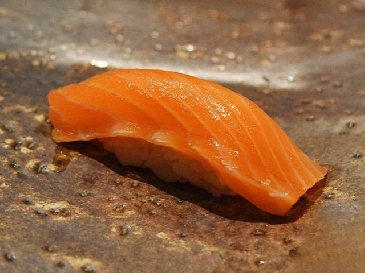
Steelhead
【Nigiri sushi: Shiromi】
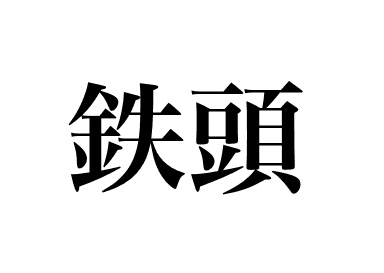
Some rainbow trout migrate to estuaries or the ocean. Like other salmonids, they migrate to the ocean and then return upstream to rivers to spawn. This anadromous form is called “steelhead.” Adults typically reach 60–80 cm in length, and large individuals exceeding 1 m have been observed. At sea, their backs range from bluish-green to bluish-black, while their sides and bellies are silvery-white. Black spots are visible on the back, sides, dorsal fin, and caudal fin. Additionally, a pale pink to reddish band may appear along the sides. Because the tops of their heads become blackish, they are called “Tettou” or “Tetsu” in Japan.
In the United States and Canada, steelhead are primarily known as a target species for recreational fishing and are particularly popular sport fish in the Pacific Northwest. However, there is no large-scale commercial fishery specifically targeting steelhead; when they are caught commercially, they are mainly taken as bycatch in fisheries targeting salmon and other species. Furthermore, to protect fish stocks, catch-and-release fishing is practiced in many regions, so steelhead are not necessarily distributed for human consumption. However, in some regions, they are eaten and used in dishes such as sushi and sashimi.
In Japan, however, rainbow trout is an introduced species and has generally been farmed and utilized in its landlocked, freshwater form. In Hokkaido, an exception has been confirmed: an anadromous form of rainbow trout corresponding to the North American steelhead. In fixed-net fisheries targeting Sakhalin pink salmon and chum salmon along the coast of the Sea of Okhotsk, a few individuals believed to be steelhead are reportedly caught as bycatch each year. However, there is no documented evidence indicating the specific migration routes or the lakes and rivers from which these individuals originated before migrating to the sea, and the population of anadromous rainbow trout in Hokkaido is believed to be extremely small.
Given this background, opportunities to eat steelhead in Japan are extremely limited. Nevertheless, it is occasionally served at high-end sushi restaurants in Sapporo that are accustomed to handling salmon varieties such as Himemasu, Masunosuke, and Keiji. However, because domestic supply is extremely limited and it is rarely available, it is difficult to accurately assess its flavor at this time. In terms of flavor, it is characterized by elegant, uncloying fat. Additionally, the Toyosu Market’s official social media accounts have featured posts about steelhead arrivals, confirming that, although extremely rare, steelhead do occasionally arrive at the market.
(Revision date: August 20, 2026)
Main production area
Hokkaido
Season
Late Summer–Autumn