

Prawn and crab
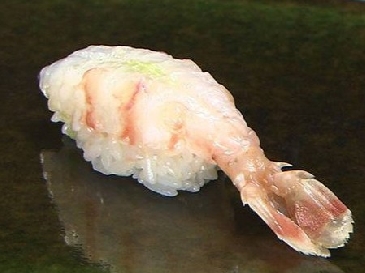
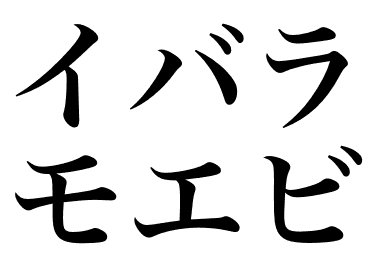
Spiny Lebbeid (Ibaramo ebi)
【Nigiri sushi: Ebi/Kani】
Its standard Japanese name is Ibaramo ebi (Lebbeus groenlandicus, spiny lebbeid or greenland shrimp). Because its shell is covered with numerous sharp spines, it is also known in Hokkaido by the nickname “Godzilla ebi,” a reference to its distinctive appearance. It is also known by regional names such as “Oni ebi” in the Hokuriku region and “Satsuki ebi” in Tottori Prefecture.
Its sweetness rivals that of Ama ebi, and its flesh is firmer. Although it does not have the pronounced sweetness of Budou ebi, which is known for its sugar-like sweetness, its flavor is perhaps closer to that of Botan ebi. The rich, flavorful tomalley inside its head is also highly prized.
In nigiri sushi, the Ibaramo ebi’s distinctive sweetness and springy texture stand out. The mild acidity of the vinegared rice enhances the shrimp’s sweetness, creating a well-balanced piece in which the topping and rice complement each other. In my opinion, Ibaramo ebi is better suited to nigiri sushi than Ama ebi or Botan ebi.
There are no fisheries specifically targeting Ibaramo ebi; instead, it is caught as bycatch in fisheries targeting other shrimp species. Consequently, catches are extremely small, and supplies on the market are limited. For this reason, encountering Ibaramo ebi at a sushi restaurant in Tokyo is exceptionally rare. If you do come across it, consider yourself lucky.
【What is Godzilla ebi】
Spiny Lebbeid (Ibaramo ebi) is widely distributed in the North Pacific and Arctic Ocean, including the Sea of Japan, the Sea of Okhotsk, and the Bering Sea. It inhabits deep waters at depths of up to 300 meters. Reaching over 10 cm in length, it is a large species within the family Pandalidae. Its body color features orange and pink stripes, and its entire body is covered in a hard carapace.
【Related contents】
List of Prawn (Ebi) and Crab (Kani)
(Revision date: November 9, 2026)
Main production area
Hyogo Tottori Shimane Hokkaido
Season
Spring-Early summer