

Fish roe
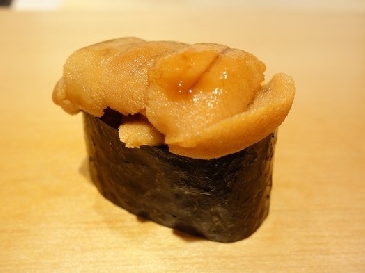
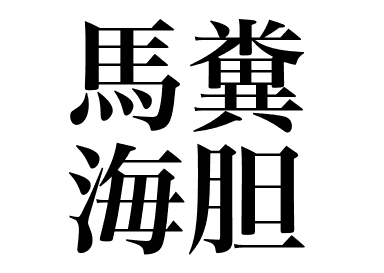
Green sea urchin (Bafun uni)
【Nigiri sushi: Gyoran】
What is Bafun uni?
In Hokkaido, the green sea urchin (Bafun uni, Strongylocentrotus intermedius) is the primary target of the fishing industry, and it is sometimes referred to by names such as "bafun uni," "gaze," "ganze," and "aka" among fishermen and in seafood markets. Therefore, when people in Hokkaido say "bafun uni," they are usually referring to the Ezobafun uni.
On the other hand, the species with the original standard Japanese name, bafun uni (Hemicentrotus pulcherrimus), is also occasionally caught in small quantities around Hokkaido, which is one reason why the names of the two species are often confused.
Today, much of what is served as "bafun uni" in restaurants and sushi bars is actually Ezobafun uni from Hokkaido. Even in distribution centers such as Toyosu Market and within the sushi industry, "bafun uni" and "Ezobafun uni" are often not distinguished as product names. As a result, much of the bafun uni prized at high-end sushi restaurants is actually Ezobafun uni from Hokkaido.
True bafun uni, like murasaki uni, has a low production volume and limited distribution, so it is mainly consumed near its production areas. In addition to being eaten raw, it is often processed into salted sea urchin (shiouni) and powdered sea urchin (konauni). Although it is distributed domestically, some is also imported from South Korea and China.
The name "bafun uni" comes from the fact that its shell resembles horse manure in both shape and color.
Also called Elegant sea urchin.
【Temperature of vinegared rice (shari) and sushi toppings】
34~36℃/15~18℃
【Trivia】
・The thing we eat as " Sea urchin" is actually Sea urchin's gonad. And how to recognize the gender of sea urchins is to see the color of its gonad. Male gonad is deep yellow and female gonad is orange nearly red. The male gonad tastes more sweeter and rich.
・The umami flavor of sea urchin is mainly made up of amino acids and nucleic acids. Some of the amino acids found in this topping are glycine, alanine, valine and glutamine. The sweetness of sea urchin is related to the glycine and alanine content, while its richness comes from glutamine. It doesn’t have a high inosinic acid content, which is a nucleic acid, but the synergistic effects of the inosinic acid and glutamic acid bring out the umami flavor. It also contains methionine, an amino acid, which contributes greatly to the unique flavor that sea urchin is known for.
・The sea urchin soaked in saltwater will get sweetened and tastier when they take them out from the saltwater and let them rest for a day. But if they don't know how to handle them and just serve them as they are just only taken from the saltwater, the sea urchin will taste bland and watery.
【Related contents】
Global sea urchin resources
What is uni sushi?
Why is it that sea urchin sushi can taste bitter?
List of Nimono, Gyoran and Others
(Updated June 26, 2026)
Main production area
Fukui Ishikawa Yamaguchi Fukuoka
Season
Spring