

Shellfish
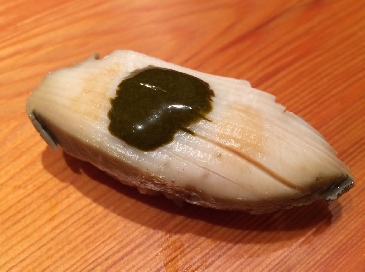

Japanese abalone (Kuro awabi)
【Nigiri sushi: Kai】
Kuro awabi (Haliotis discus discus), also known as Japanese abalone or black abalone, is considered to have the finest flavor among all abalone species when eaten raw. It is often served raw as a topping for nigiri sushi at high-end sushi restaurants. Growing on rocky coastal reefs while feeding on abundant seaweed, including kelp, it is filled with the rich bounty of the sea. When enjoyed raw, it offers a pleasantly firm and crunchy texture, with its greatest appeal lying in the subtle aroma of the ocean that spreads with every chew.
On the other hand, steaming Kuro awabi further enhances its natural umami. While maintaining a satisfying firmness, the meat becomes tender, and each bite releases a rich, flavorful broth. The opportunity to experience a deep and complex taste distinct from that of raw Kuro awabi is another of its unique charms
.
While many shellfish are at their best from winter through spring, Kuro awabi reaches its peak season in summer. During this period, its flesh is rich in glycogen, which, together with naturally occurring umami components such as glutamic acid and adenylic acid, creates a deep and concentrated flavor. In addition, its refined sweetness, derived from amino acids such as glycine and compounds such as betaine, further enhances its appeal, making it one of the most prized shellfish in Japanese cuisine.
When selecting sushi toppings, bigger is not always better. Although larger shellfish are generally considered more desirable, sushi requires careful consideration of not only flavor but also factors such as the color of the flesh, the beauty of the cut surface, and the overall appearance when formed into nigiri. For this reason, the ideal size of Kuro awabi varies depending on the philosophy and style of each sushi restaurant.
【How to prepare abalone】
There are several methods of preparing abalone. All of them are designed to soften the abalone and bring out its flavor and aroma to the maximum extent possible.
There are two types of cooking methods for Ni-awabi (boiled abalones): Saka-ni (sake-boiling), in which abalones are boiled with a lot of sake, and shoyu-ni (soy sauce-boiling), in which abalones are boiled with soy sauce and other seasonings.
Mushiawabi (Steamed abalones) using a steamer can also be prepared in a variety of ways, such as steaming with sake, salt, or no seasoning.
Sake is added to the abalones so that the umami of the sake can soak into the abalones, reduce their odor, and bring out their soft texture while leaving them chewier. As a side note, sushi restaurants also have a custom of calling the abalones stewed and softened "Mushi-awabi (Steamed abalones). To be precise, they are Ni-awabi (boiled abalones).
【Trivia】
Abalone is thought to be a lucky charm that symbolizes good fortune and longevity, and legend has it that the Qin Emperor, the first ruler to unite China, traveled all the way to Japan to find the coveted shellfish in search of immortality.
【Substitute fish】
Chilean abalone: Concholepas concholepas (Bruguie, 1789)
Grand Keyhole Limpet
Variously coloured abalone: Haliotis diversicolor diversicolor Reeve,1846
Red abalone: Haliotis (Nordotis) rufescens Swainson,1822
South African abalone or the perlemoen abalone: Haliotis midae
Blacklip abalone or Earshell: Haliotis ruber Leach.1814
【Related contents】
Abalone around the world
What is Tokobushi abalone sushi?
List of Shellfish (Kai)
(Updated June 18, 2026)