

White flesh
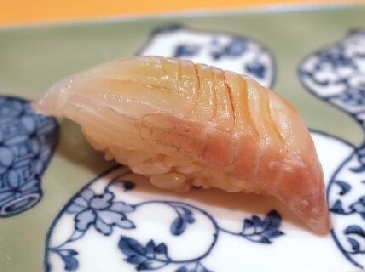
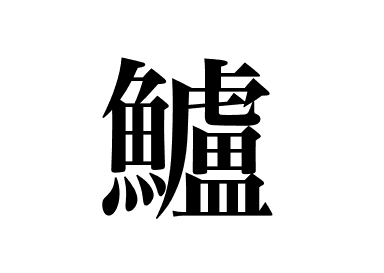
Japanese sea bass (Suzuki)
【Nigiri sushi: Shiromi】
What is Japanese sea bass (Suzuki)?
Suzuki (Japanese sea bass) is found southward of southern Hokkaido along the coasts of Japan and the southern Korean Peninsula. The adult fish lives from rocky shores to inner bays and the young fish lives from brackish waters to freshwater areas. It grows to about 20 cm in the first year and about 40 cm by the third birthday, eventually reaching about 1 m. The body is a dark, silvery white color and has a shine like silver. The spawning season differs by region and is from October to February in Tokyo Bay, October to January in the Seto Inland Sea, December to January in Wakasa Bay and November to March in Kyushu.
It is often said that among white fish, red seabream (tai) is best enjoyed in spring for its rich umami, while flounder (hirame) is prized in winter for its delicate aroma. Sea bass (suzuki), meanwhile, is considered the quintessential white fish of summer. Because sea bass has a distinctive aroma, it is best enjoyed thinly sliced rather than cut into thick pieces. The flesh is firm yet tender, and with each bite, the refined sweetness characteristic of white fish spreads across the palate. However, since sea bass often swim into inner bays where freshwater flows in, some may occasionally develop a muddy flavor.
Additionally, sea bass is known in Japan as a “success fish,” meaning its name changes as it grows. Fish measuring about 20–30 cm are called “Seigo,” those around 40–60 cm are called “Fukko,” and those over 60 cm are known as “Suzuki.” The size most commonly used for sushi toppings is typically the “Fukko” stage.
Sea bass has particularly strong umami in the kawagishi—the layer between the flesh and the skin—which many people enjoy. For this reason, it is sometimes served as skin-on nigiri, with the skin lightly softened by pouring boiling water over it. In the past, when especially fresh sea bass was available during summer, it was often prepared as arai. Thin slices of the fish are placed in ice water until the flesh turns white, removing excess fat and creating a firm, pleasantly crisp texture.
Also called Japanese sea perch or Bass.
【Substitute fish】
Largemouth bass (Black bass): Micropterus salmoides (Lacepède,1802)
Nile perch: Lates niloticus (Linnaeus, 1758)
Chinese seabass or Spotted sea bass (Tairikusuzuki): Lateolabrax maculatus (McClelland, 1844)
Striped jewfish: Stereolepis doederleini Lindberg and Krasyukova, 1969
Sea bass was one of the first commercially farmed fish species in Europe and is considered the most important commercially farmed fish in the Mediterranean in recent years. Turkey and Greece together account for about 69% of world production.
Turkish sea bass (Dicentrarchus labrax (linnaeus.1758)) is called European seabass or Lubina. It is a different species from Japanese sea bass (Lateolabrax japonicus (Cuvier, 1828)).
【Related contents】
What is Arai?
What is Shusseuo?
What is Blackfin Seabass (Hirasuzuki) sushi?
List of White flesh fish (Shiromi)
(Revision date: May 15, 2026)