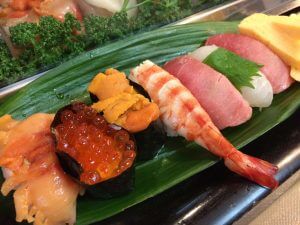
The Art of Scent in Sushi Dining: A Matter of Courtesy and Respect

Sushi is a culinary art that engages all five senses—it is to be appreciated with the eyes, tasted with the tongue, and experienced through the nose. Among these, scent plays a particularly crucial role in shaping the overall impression of each piece.
Smell—whether orthonasal (through the nose) or retronasal (through the back of the throat while chewing)—is essential to how we experience flavor. When we eat, aroma compounds rise from the mouth to the nasal cavity, enhancing the taste of food. This is why, when we catch a cold and our nose is blocked, food seems tasteless. In fact, if you pinch your nose and drink orange juice, you might not even recognize its flavor. This clearly demonstrates just how deeply scent influences what we perceive as taste.
For instance, the umami of squid is not produced through the typical ATP-to-inosinate transformation seen in many fish. Instead, its flavor comes from the synergistic effect between adenosine monophosphate (AMP) and glutamic acid. This combination is said to produce a milder umami compared to ATP and glutamic acid, which is why freshness and texture become all the more important. Rather than allowing the squid to age, it is best enjoyed while still fresh, with its slightly firm, crisp bite intact.
Moreover, the gentle sweetness of squid is believed to come from taurine, and appreciating that subtle flavor requires an environment free from interfering scents. A strong perfume can easily mask such delicate nuances, making it difficult to fully experience the mild umami and sweetness that squid offers. To savor this gentleness, it is essential to refrain from wearing strong fragrances.
In the world of sushi, there exists the philosophy of “listening to the voice of the ingredients.” To bring out the natural flavor and aroma of each element, sushi chefs deliberately avoid excessive seasoning or added scents. They pay meticulous attention to factors like temperature, humidity, and even the angle of the knife.
Take, for example, the lean red meat of bluefin tuna. It is the sushi chef’s skill that determines the balance among its faint acidity, sweetness, and bitterness—none of which should overpower the others. If just one note dominates, the depth and complexity of the tuna is lost. Chefs carefully assess this balance to craft each piece of sushi.

Similarly, with Kitamurasaki sea urchin, its fragrance is so delicate that some chefs choose not to wrap it in nori (seaweed), which might overpower its scent. This is another example of the deep consideration given to the ingredient’s natural aroma—a hallmark of the sushi chef’s philosophy.
In such a precise and sensitive culinary context, the intrusion of strong perfume from outside can become a serious disruption. If scent alters the perception of taste, both the chef’s craftsmanship and the ingredient’s unique character are diminished. Choosing not to wear perfume is, therefore, a simple yet meaningful way of showing respect for the chef’s work.
Additionally, most sushi restaurants—especially those with counter seating—are shared spaces, where diners sit mere inches apart. In such close proximity, even a modest amount of fragrance can affect the experience of neighboring guests. Strong scents can hinder their ability to enjoy the meal, making consideration for others not just polite, but necessary.
This kind of restraint reflects a fundamental virtue in Japanese culture: humility. In Japan, harmony is valued over self-assertion, and understatement is seen as a form of beauty. Refraining from wearing perfume is not merely about etiquette—it is a quiet expression of attentiveness and grace. Such mindfulness allows one to truly understand and appreciate sushi culture with both reverence and respect.
Related contents:
We hope this information will be helpful.

Revision date: June 10, 2025
Share this article