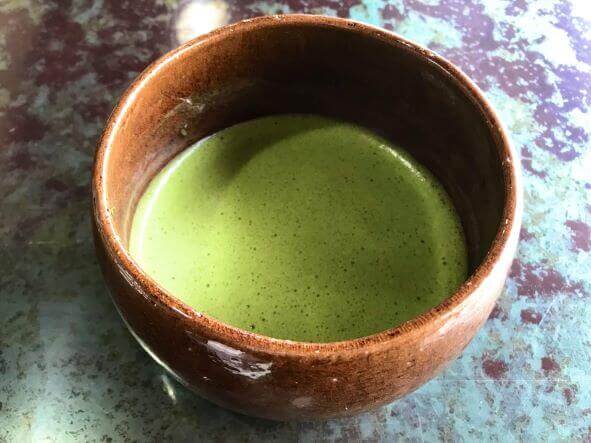
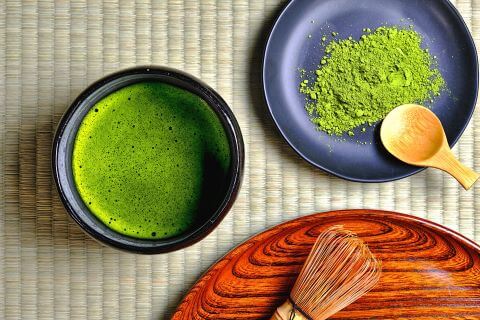
The definition of “Matcha” according to the Japan Tea Central Public Interest Incorporated Association is, “Fine powder made by grinding up Tencha with a handmill made from un-rolled, dried raw leaves that were cultivated under cover and shaded from sunlight.”
To put it simply, Matcha is made by grinding up Tencha with a tea grinding handmill, into fine particles 1 to 20 μm in size. Tencha is grown in mostly the same way as Gyokuro but covered for 5 days longer than Gyokuro. The initial steaming method is also the same as Gyokuro and Sencha, but the difference is that after steaming, it is just dried, without any kneading.
After steaming, a device called a tea leaf spreader is used to spread them over 5 to 6 m in warm air, the moisture from the steaming is removed, and then they are cooled. This process is repeated 4 to 5 times and then it is normally dried in a Tencha oven. The finished Tencha is then left to rest in a cool place until November.
Matcha produced at the beginning of November is ground using a handmill as “newly picked tea,” but since it had been resting, it emits the refreshing scent of new tea, giving it a mellowness. Meanwhile, lately, newly picked tea is ground with a handmill immediately to make Matcha that retains the refreshing scent, creating a flavor that differs from that of the tea ceremony world.
Consuming the actual Matcha leaves allows you to take in all the non-water-soluble components, so it’s gained attention as part of a health boom lately. In order to keep up with that demand, Matcha that strays from the original definition is mass-produced using mills.
Matcha is a drink used at places like tea ceremonies to enjoy with Japanese-style sweets. It goes without saying that this is not to be drunk with Nigiri sushi. When enjoying Nigiri sushi, you will be served Konacha, Mecha or Roasted green tea.
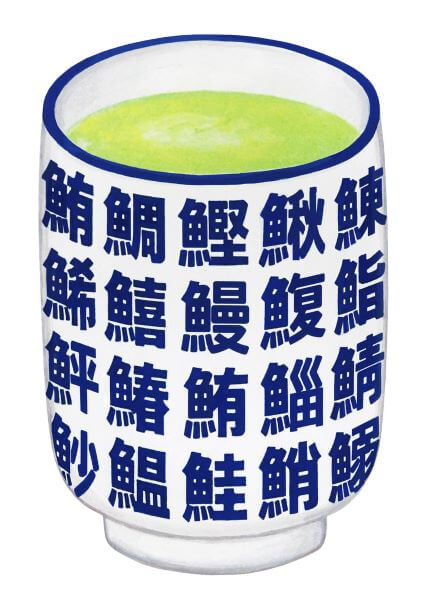
The sides of the Yunomi have the names of the fish written in Chinese characters.
The large teacups commonly seen at sushi restaurants are often called sushi yunomi (寿司湯呑み). Their distinctive size is one of the unique features of sushi culture, and the reasons behind it are both practical and historical.
This practice’s origins can be found in the street stands leftover from before WWII. It was a natural remedy for the outdoor sushi vendors who set up street booths and needed a way to maintain heat in their drinks in order to make it through the cold. In addition to lack of convenient access to water, these stands were one-man operations, and the time that serving tea takes away from his time making sushi were also contributing factors. In other words, the reason the teacups are large is natural wisdom of sushi shops from long ago.
In sushi culture, this tea is called agari, and it is considered an essential part of the meal. Also, hot tea has the effect of dissolving the fat that remains on the tongue after eating a fatty sushi topping, cleansing and preparing the palette for the next piece of sushi. This is a task that cannot be performed by beer or Japanese sake.
Then, large teacups became one of the special features at sushi restaurants and a favorite feature among customers, so it wouldn’t make sense to go back to small teacups now. Beyond practicality, the large yunomi also came to symbolize the bold, generous spirit of sushi dining. Compared to the delicate teacups used at home, their size and sturdiness emphasize that eating sushi is a special, lively experience.
However, times change. There are now sushi restaurants that use relatively small teacups that they change with each refill in an attempt at a sort of stage effect. There are even places that have the teacups imprinted with the restaurant name, phone number, etc. and hand them out to favorite customers. This has tremendous advertising effects.
There are various production sites, but most that are mass-producing are located around the Toki area of Gifu prefecture and the more expensive but also relatively more durable tend to be Arita ware from Saga prefecture. There are wide varieties in shape and pattern, but despite the preference for large teacups at sushi restaurants, there is such a thing as cups that are too big and they are also harder to drink from. Also, thicker cups may be more durable, but they are also harder to drink from. Even when made thick, the rim should be thinner. The cylinder shape is hard to clean and the bottom of the cup tends to be stained by the tea. My personal opinion is that it is hard to find what I would call a refined teacup with a nice color and shape. But the worst is when a thin teacup or tea bowl gets too hot to hold.
When it comes to green tea, I’m sure you’ve heard of Gyokuro (玉露) and Matcha (抹茶), but you are likely not familiar with Konacha (粉茶) and Mecha (芽茶). Let’s remedy that by explaining both Konacha and Mecha here.
First and foremost, the three broad tea categories based on the processing method of the young leaves include green tea, oolong tea and black tea, but these are all made of leaves picked from the same trees, and then end up as completely different teas just by changing the processing method. Oolong tea and black tea are made by artificially fermenting the tea leaves as part of the processing. On the other hand, green tea is made without fermentation. The raw material of green tea that is eventually made into Sencha, Gyokuro and Tencha (碾茶), which is the raw material for Matcha among others. Then Konacha, Mecha, etc. are byproducts of the process for making Sencha and Gyokuro.
First of all, Sencha is the foundation of Japanese tea.
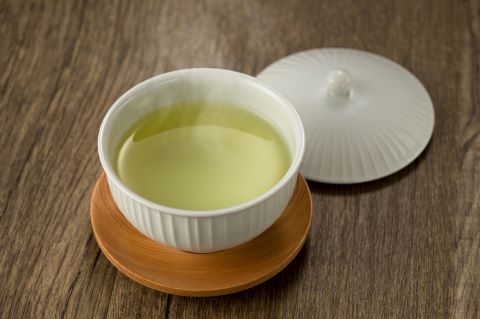
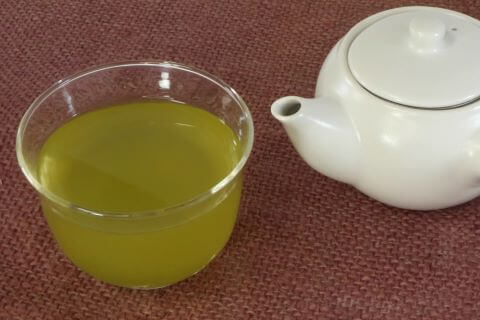
Sencha is known for its gentle flavor with a lingering, but subtle sweetness amidst the inherent fresh scent and bitterness. Generally, the color of Sencha is a transparent yellowish gold. Freshly picked tea leaves are immediately steamed, stopping the fermentation process. The steaming process gives each completed, individual tea leaf a deep green color. Tea was originally introduced to the world from China, but Sencha is the only tea with a unique, deep flavor created by Japan. About 80% of the tea produced in Japan is said to be Sencha. The most delicious Sencha comes around from the end of April to May, which is the beginning of the tea season. The appropriate volume of tea when steeping for one person is 2 to 3 grams of tea leaves to 70 milliliters of hot water and the appropriate water temperature is around 70℃ in order to bring out the sweetness and umami.
Next, we’ll describe Gyokuro.
By blocking sunlight and growing in the shade during the sprout timing, the leaves for Gyokuro grow full of theanine, which is an umami component, ending up with tea leaves that have a unique sweetness. It is common to focus only on taste, but the fragrance, described as “enveloping” is also wonderful and should not be discounted. This fragrance is often described by people from outside of Japan as a having a seawater-like scent or being salty. Yame in Fukuoka, Uji in Kyoto and Okabe in Shizuoka prefecture are the three famous production spots for Gyokuro. The appropriate volume of tea when steeping for one person is 2 to 3 grams of tea leaves to 20 to 30 milliliters of hot water and the appropriate water temperature is around 50 to 60℃ in order to bring out the sweetness and umami. This will give you the ultimate cuppa that is the epitome of luxury.
Most of the Agari (cup of tea to finish the meal) served at sushi restaurants is Konacha.
By avoiding the use of a teapot and only preparing the number of teacups needed, directly in the cup, strong tea can be made just by adding the hot water later. Conventionally, steaming is a very important step in making tea, but it isn’t necessary with Konacha. Konacha raw ingredients are mainly made up of the broken tea leaves from the Gyokuro and Sencha manufacturing process.
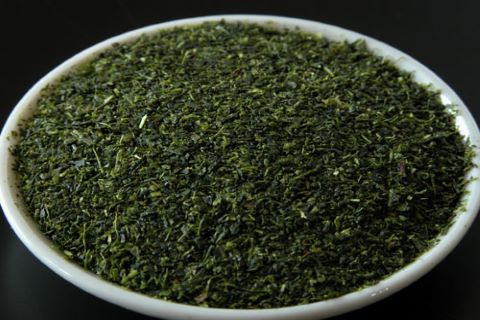
Brewing konacha results in a dark, deep green color. As the name suggests, it has a lot of powder in it, so the tea leaves in powder form settle in the bottom of the teacup. There for it also carries the benefit of being richer in nutrients than other teas. The sense of transparency is moderate and has a bit of a more somber color. The appropriate amount of water when brewing konacha is one gram of tea leaves to 40 to 60 milliliters of hot water. Konacha is strong, so making it with water that is about 80℃ gives it a mellow flavor. Tea that is made quickly with hotter water gets a moderate bitterness typical of Japanese tea and cleanses the palate.
Also, Japanese people have treasured food since long ago. For example, the leaves of vegetables like daikon radish are sauteed and consumed rather than discarded. As a society they have spent many centuries making efforts to figure out how each part can be made delicious. Mecha is made by collecting the cut-off tips of sprouts and leaves in the process of manufacturing Gyokuro and Sencha. There are many people who think Mecha is tea made just from picking the small buds from tea trees, so don’t make that mistake.
Mecha is a strong green tea that gets a strong scent when brewed. The longer the extraction time is, the stronger the tea, so if the color is too dark it changes the impression it gives and also affects the flavor. That’s why it’s important to pay close attention to extraction time. In general, the volume should be 2 grams for 70 milliliters of hot water–the same as Sencha. When preparing for more people, fewer tea leaves should be used. When brewing, wait patiently for the rounded Mecha leaves to open up. Around 80℃ is the appropriate temperature, but if less bitterness is preferred then it can be made with hot water at 90℃.
In summary, Konacha and Mecha, which are teas used at sushi restaurants, are made from the broken-off parts of the tea leaves carefully selected for Sencha and Gyokuro. They don’t require the steaming step of the tea-making process, so they can be prepared quickly and include the appropriate amount of bitterness for cleansing the palette, making them perfect pairings for nigiri sushi.
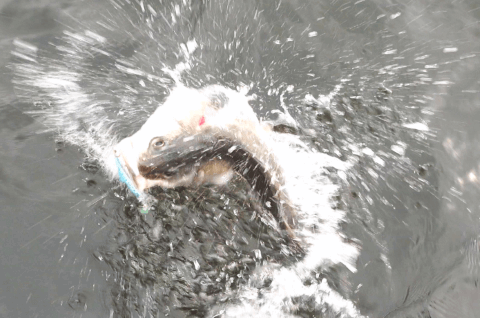
When a fish is pulled from the sea, it is put into an extraneous environment with sunlight, temperature and hot human hands that it isn’t used to, so it starts to swim violently with all its might, trying to get away, in a perpetual state of tension. If cooked in this state, blood will still be running through all the cells of the body. There is no sense of transparency in the meat at this point, especially the white meat. The body also hardens. The entire body reeks of blood. In other words, the meat of white fish is full of blood, making it unsuitable for preparing as food.
Fish are placed in a tank with enough water and oxygen, only in numbers so that they do not rub up against each other. A lid is placed on the tank to create a temporary dark space. At this time, the temperature of the water is an ideal, low temperature. This keeps the fish from struggling. After being left for half a day, it will regurgitate anything undigested that was eaten prior to being caught, become acclimated to the dark space and settle down. The bloody tone from struggling fades throughout the body and the fish relaxes.
Creating this state is called “Ikekoshi”.
Ikekoshi methods differ depending on the species of fish, but the idea is to keep this state for only one day at most. When left for two or three days, the fish loses meat, starts to swim around the dark chamber that it has now grown accustomed to, and its body, tail and fins rub up against other fish or the sides of the tank, causing damage. This hurts the meat quality and appearance so it is something the fisherman must look out for.
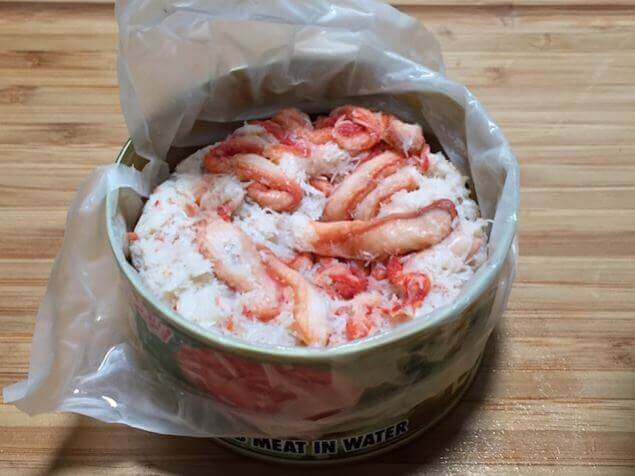
Crab protein has a high sulfur content. This sulfur can bind with the iron in the can, resulting in ferric sulfide that causes black spots in the meat. Black discoloration of the crab meat significantly mars the appearance and reduces the product value. In order to prevent this, parchment paper with superior water resistance and oil resistance is used to keep the crab meat from coming in contact with the can.
Meanwhile, the trace amounts of magnesium, ammonium and phosphoric acid contained in crab and fish meat sometimes bind to create magnesium ammonium phosphate glassy crystals. This chemical phenomenon is called struvite.
These crystals have no taste or odor and dissolve easily in the stomach so they are not considered to be an issue under the Food Sanitation Act. However, large crystals may hurt the oral cavity so efforts are made to improve production methods to prevent generation of crystals and keep any crystals that do form as small as possible. However, parchment paper does not reduce the struvite phenomenon.
In summary, do you now understand the truth of why crab meat is wrapped in white paper? Of course, nowadays the surfaces of cans are processed in a way that the iron doesn’t start to dissolve, so perhaps the correct theory is that the parchment continues to be used to give a sense of luxury.
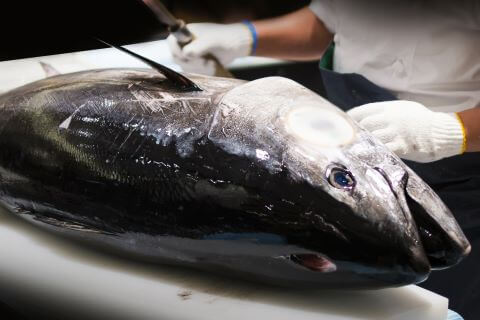
There are three elements that make good quality Kuromaguro(Bluefin tuna).
They are decidedly, color, fragrance and texture.
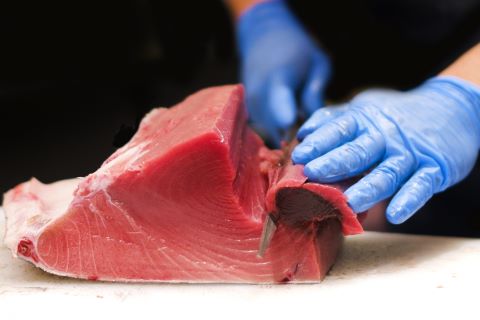
First of all, color does not simply refer to the color of the cross-section when the fish is cut with a butcher knife.
It refers to how long the fish maintains its “characteristic coloring”. After all, tuna darkens as time passes, eventually turning a burnt-brown color. The true, visual charm of Kuromaguro is the eye-awakening red color that catches your attention when the sushi is placed on a counter or plate. This wonderful coloring is a characteristic of tuna caught through longline fishing or single‐hook fishing. On the other hand, it is said that those caught in round haul nets don’t hold their color and don’t last long. When frozen tuna is thawed, it turns brown within a day. This focus on color is based more on Japanese restaurants that serve sashimi at tables that are located farther away from where the food is being prepared, than on sushi. Incidentally, Mebachi, despite also being tuna, holds its color longer than Kuromaguro does and is suitable for take-out sushi. Minamimaguro is a darker red color than Kuromaguro, but it also loses its color quicker. Kihada maintains its color best.
Next, where does Kuromaguro’s appealing fragrance come from?
The truth is that the source of fish flavor components is still being researched and there are a lot of unknowns. What we do know is that this fragrance is made up of many volatile compounds, but since there are only trace amounts of each one, they are difficult to analyze.
Yet, in the case of expensive Kuromaguro, every measure possible is taken to make sure this fragrance is maintained. Kuromaguro is a migratory fish that gets around by swimming at high speeds in the surface layer of the sea. It needs strong muscles to swim this fast. it also needs to circulate blood throughout its entire body in order to vigorously move those muscles. When a tuna violently struggles to resist and twists its body to avoid being caught, the proteins in its muscles (myosin and myoglobin) rapidly react with oxygen and start to degenerate. This causes Yake and the oxidized odor of tuna. It is important to catch the tuna while causing it as little stress as possible, quickly remove the organs and then use ice to rapidly cool the entire body. If this process is delayed then the pleasant fragrance will transform into an odor. In other words, the scent of Kuromaguro all depends on how it is processed after being caught.
The meat of Kuromaguro that is properly processed emits a unique aroma with a slightly acidic taste when you put it in your mouth. That fragrance lingers for a long time and it combines beautifully with the acetic acid of the sushi rice to go straight to your nose. Then, the moment the fish has disappeared down your throat, the scent of the iron and a subtle acidic taste linger very nicely. This experience is only possible with the exceptional Kuromaguro.
As for the texture, this is determined by the fat distribution of the tuna.
Especially in winter, the Harakami cross-section of Kuromaguro is marbled, much like the Ribulose of Wagyu beef. The melting point for the fat of high-quality tuna is low, and it starts to dissolve even at human skin temperature. This is why sushi chefs who are particular about the sense of unity between shari (sushi rice) and tuna, say, “Shari should be skin temperature.”
There are many chefs who say that the umami of Kuromaguro is in the fat. In the first place, Kuromaguro is one of the fattier fish, and especially between autumn and winter, the Kuromaguro that fed on Surumeika and Sanma has exceptional Harakami. The organs of both Surumeika and Sanma are rich, full-bodied and delicious, even when grilled and eaten by humans. In other words, it is the Surumeika and Sanma that the tuna feeds on that determine the quality of meat. As an example of the meat quality of tuna being affected by what that tuna fed on, Kuromaguro in the Atlantic ocean that has fed on Nishin may exhibit the scent of Nishin when made into sashimi.
However, having a high fat content is not the most important factor. For example, farmed Kuromaguro is fed a high-protein diet so that it will be fatty regardless of the season. Yet, the fat is tougher than that of the wild fish and it’s not something that leaves you wanting a lot more. In comparison, the fat of wild Kuromaguro has a fine texture throughout, immediately melts in your mouth and is digested easily. As sushi chefs know, the fresh fish seems to suction to their hands when making the nigiri sushi. In the same way, it has a smoothness that seems to suction to your tongue when you put it in your mouth. Once you’ve swallowed, it leaves you craving more.
Both conveyor belt sushi and premium sushi have versions of sushi made with raw sweet shrimp or botan shrimp. However, in Edomae Sushi, boiled shrimp is always used. The use of raw shrimp in sushi started in the Kansai region. Moreover, in the Kansai region, there are many restaurants that make sushi with live Kurumaebi known as “Odori or Kassha”. However, this way of eating may be declining nationwide. It is probably because there is increased texture when boiled, so it tastes better.
Going back to Odori, “Odori” means “dance” in Japanese and it is said that this name came from the fact that shrimp twitches on the sushi rice and looks like it is dancing. If you look up the roots, it seems that this method of serving started at a sushi restaurant in Kyoto City in the early Showa period. It spread throughout the Kansai region, but although Odori may look easy to make, the method is actually quite elaborate.
Let’s introduce the common recipe here. First wash the live Kurumaebi with fresh water and start by bending the head with your hand while detaching it from the body, then peel off the shell. Next, peel the skin off the abdomen and cut the abdomen open vertically. Fresh shrimp is difficult to peel, so it is important to do it very carefully. Next remove the veins from the back and sprinkle on just a bit of mirin and vinegar, then lightly rinse off with ice water. After that, parboil just the tail in boiling, salted water to make it look attractive.
Then make the sushi with the open side facing up. The direction is important because it is easier to tell that the shrimp is dancing when it is arranged this way. To finish, sprinkle lemon juice over the shrimp meat. This stimulates movement of the body.
Now let’s discuss how a customer eats Odori. It goes without saying that since the shrimp is still alive, the moment you dip the topping in the soy sauce, the shrimp twitches in its death throes, convulsing violently. Apparently the customers are greatly pleased to see this. We don’t recommend the faint of heart to order this dish.
Incidentally, eating only the shrimp in this way is called “Odorigui”. In China there is a dish in which living shrimp is soaked in Shaoxing rice wine or fermented alcohol, made drunk, and then eaten once it has settled down. These sorts of methods may be considered cruel in some western countries.
The names you’ll hear at sushi restaurants include Itasan, Taisho, Oyakata, Goshujin and Master, etc.
Sushi restaurants generally aren’t strict about this sort of thing, so at an easy-going place probably any of these are acceptable. However, the other customers would probably feel more awkward about what you call the sushi chef than the chef himself. This will be a short lecture about the correct way to address a sushi chef.
First of all, “Goshujin (ご主人)” is used for all shops, is correct Japanese and sounds perfectly normal in both Kansai and Kanto. This title means “shop owner.” However, this is not usually used at sushi restaurants. “Master (マスター )” means the same thing as “Goshujin,” but is mainly reserved for places like bars and cafes and is not used at sushi restaurants.
Another common title is “Itamae (板前)” or other versions of it like “Itasan (板さん),” but these all mean “cook” for Japanese cuisine. Sushi is a type of Japanese cuisine, so calling a sushi chef “Itasan” is not a mistake. However, even amidst Japanese cuisine, sushi requires unique techniques, which sets sushi chefs apart from others.
Itamae learn various Japanese cooking techniques while apprenticing, but actually, they rarely make sushi. Therefore, even if a Japanese cuisine cook were to jump into the sushi industry, they would basically have to start over completely. Furthermore, sushi chefs do not just learn the technique of making individual pieces of sushi, they must also acquire the skill of communicating with customers. My personal opinion is that “Itasan” is a way to address cooks who are employed.
Next, there are customers who say things like, “Taisho (大将), make it without wasabi.” Taisho is a term for shop owners, mainly used in Kansai. However, Taisho is not an appropriate way to address an Edomae sushi chef.
So, what should you call a sushi chef then?!
The correct term is Oyakata (親方). Oyakata refers to a full-fledged, independent chef. We believe sumo stable owners (a position that not just anyone can achieve and requires prior results as a sumo wrestler) are also called Oyakata. This is just for your reference.
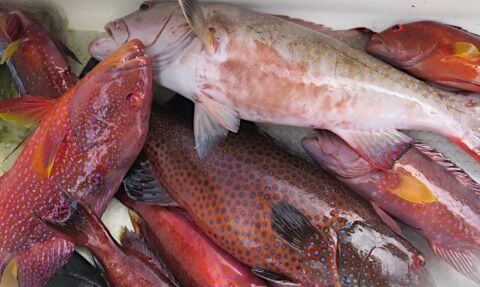
Ciguatera fish poisoning is a type of food poisoning caused by consuming certain fish that live in tropical and subtropical coral reef areas such as Moray eel, Grouper, Star snapper, Japanese scavenger and Parrot fish.
It is caused by toxins such as ciguatoxin, but it mainly generates from dinophyceae that are stuck to algae. The process of ciguatera occurring involves the food chain. Even if a fish itself doesn’t originally contain toxins, an herbivorous fish may eat algae that turns it toxic. That fish may be eaten by a carnivorous fish, which then accumulates high concentrations of ciguatera in its body. When a human consumes the carnivorous fish it can cause food poisoning in the human. There are as many as 300 species of fish that contain ciguatoxin. The ciguatoxin, which causes the food poisoning, cannot be killed by boiling or grilling, so it can’t be prevented through food preparation.
Symptoms of this food poisoning mainly consist of sensory nerve abnormalities, muscle soreness, itchiness and abdominal pain, but it is rarely fatal. However, it takes quite a long time to recover from compared to other toxins and the average recovery time is said to be two to three weeks. It is vital to diagnose ciguatera fish poisoning as soon as possible. Most symptoms develop within one or two hours and up to to 24 hours after consumption and one unique symptom is dysthermesthesia. This is a form of dysesthesia in which touching cold things feels like its burning. It occurs one to two days after the poisoning and is a known characteristic of ciguatera fish poisoning. Another characteristic symptom of ciguaterafish fish poisoning is joint pain within 24 hours after consuming the fish. In any case, it is important to be seen by a specialist as soon as possible.
Incidentally, the name ciguatera came from Spanish immigrants to Cuba as a name for food poisoning caused by the cigua shellfish in that region. Later it was also used to describe fish poisoning, which causes similar symptoms.
Inarizushi is a simple yet deeply flavorful type of sushi made with just two main components: vinegared rice (sumeshi) and seasoned fried tofu pockets (abura-age). Sometimes the rice is mixed with finely chopped ingredients like simmered carrots or shiitake mushrooms, adding subtle depth to the flavor. This apparent simplicity gives chefs the freedom to showcase their creativity through delicate seasoning and presentation. While its precise origins are unclear, Inarizushi is believed to have emerged toward the end of the Edo period (1603–1868).
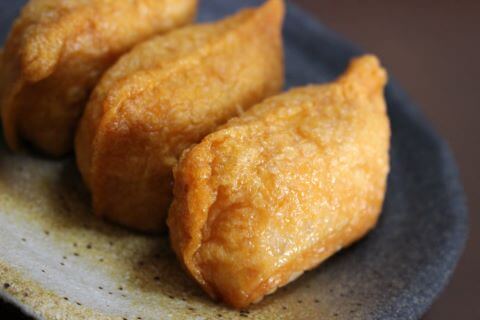
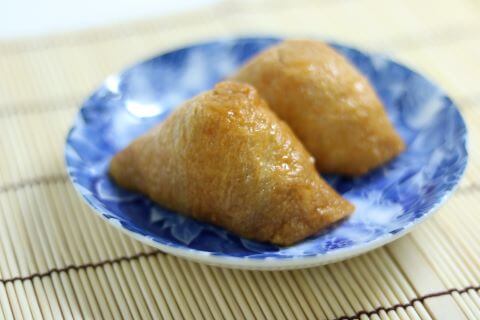
In Eastern Japan (such as the Kanto area), Inarizushi is often shaped like a bale or rectangular pouch and features a strong sweet and salty flavor profile. In Western Japan, particularly the Kansai region, it tends to be triangular and lighter in flavor, with a noticeable emphasis on the umami of dashi (soup stock). These regional styles reflect not only taste preferences but also local food culture and beliefs.
Type of Inarizushi
When categorized based on shape, the types of Inarizushi are bale type, triangle type, open type and roll type. They can also be categorized by the type of rice stuffed into the fried tofu (abura-age): either white vinegared rice or vinegared rice mixed with other ingredients. The four elements that make up the flavor are sweetness, soy sauce, soup stock and acidity, and the balance is very important. In the east of Japan the flavor tends to be a stronger sweet and salty while in the west the soup stock is more apparent.
Here we will explain the characteristics of Inarizushi using categories based on appearance.
Bale Type
Inarizushi seems to be a version of Sugatazushi. Perhaps the Sumeshi is stuffed into the fried tofu instead of into a fish (a hypothesis). When looking at literature from the Edo period, there is Inarizushi in the form of a long rod that was cut up and sold. Someone probably thought that if they were going to cut it up into bite-size pieces anyway, they may as well make it in easy-to-eat sizes in the first place (an inference). There are some shops that still sell Inarizushi in long rod form, but the difference is probably in how the fried tofu is cut. You can find this from Sekigahara, Gifu and further eastward.
Triangle Type
Why is the appearance triangular? There are many theories, but the most plausible is that these are meant to be shaped like a fox ear. Inarizushi originated as an offering to the Inari god at festivals. The Inari god is the deity of agriculture and patrons pray to this god at Inari shrines. The head Inari shrine is Fushimi Inari Taisha in Kyoto. Legend has it that fried tofu is a favorite of foxes, who are said to be messengers of the Inari god, so it was made into the shape of fox ears. Another theory is that it is the shape of Mt. Inari where Fushimi Inari Taisha is located. Apparently this is because the triangle type originated at Fushimi Inari Taisha. However, Inarizushi shops in Kansai use lucky bale shapes in order to pray for prosperity in business. On the other hand, Inarizushi made at home or in soba restaurants are usually triangular. This type is found from Sekigahara, Gifu and westward.
Open Type
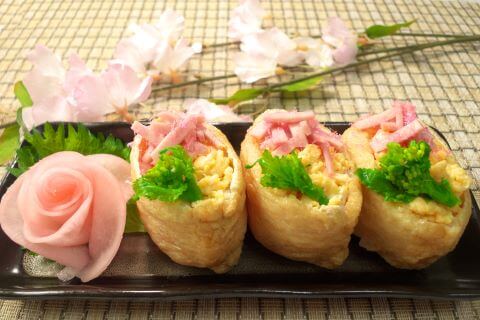
The open type is a revolutionary style. How it came about is not clear, but perhaps someone just stuffed it too full of ingredients. Since the ingredients are visible, it looks even more delicious than normal Inarizushi. It’s really beautiful when many are lined up. You can imagine how this served as inspiration to those who went on to add a variety of ingredients. It’s also easy to make since all you have to do is fill it with ingredients. It is now widely recognized for its aesthetic appeal and versatility. Open Inarizushi has spread internationally and has become a beloved style in countries such as France, South Korea, Australia, and Singapore.
Roll Type
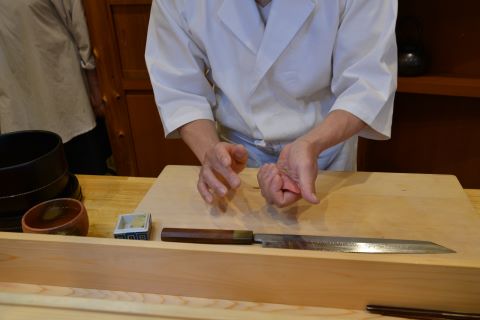
Almost all roll-type Inarizushi in Japan is made with a dried fried tofu from Kumamoto called Nankanage. Unlike normal fried tofu, it looks like paper in the shape of a sponge and does not form a bag. That’s why the only way to use it was by wrapping it around the rice. Also, this method might have emerged as a practical solution to avoid tearing the tofu while stuffing it.
Summary
Ignoring whether or not it is true that carnivorous foxes really love fried tofu, apparently the foxes that serve as messengers to the Inari god do love it. As foxes were thought to be delivering prayers to the Inari god, their favorite fried tofu was given as an offering to stay on the fox’s good side. After that, they started the practice of stuffing rice that was grown with the blessing of the Inari god. As you can see, Inarizushi is the combination of two ingredients involving the Inari god.
There are many things that fall under the term “sushi”.
Within Japan, every prefecture has at least one type of local sushi. In order to understand these different types more deeply, we have separated them into categories and will introduce the typical types.
First of all, there should be rules when categorizing things.
However, there are loads of things in this world that seem to have been categorized without any rhyme or reason. The same thing applies to the words used to express sushi categories and types of sushi. This stems from a complete lack of understanding of the history of sushi and how it is made. However, in the end, sushi is food, so there is no academic dissertation on it. Please consider this to be just one point of view when reading the following.
We will first categorize the sushi with clear rules and then introduce individual sushi.
There are various theories regarding the etymology of the word sushi, but the word stems from “su” which is the kanji for “acid” and means “sour”. Initially, “sushi” was used in Japan to refer to Narezushi*, which is eaten with the natural acidity from fermenting salted fish and white rice together. One of the theories is that it started as Sumeshi (‘su’ means vinegar and ‘meshi’ means rice in Japanese) and the “me” was omitted leaving just “Sushi”. Rice is clearly the main attraction in the word and it is thought this word was used to refer to “Namanarezushi**”, which appeared in a time after Narezushi. Although these are only theories, it can only be called Sushi if sour rice is involved. I don’t believe there is anyone who would dispute this fact.
*Narezushi: Mainly made from seafood, rice and salt, allowed to ferment for three months to one year until the rice no longer maintains its shape. Only the fermented seafood is consumed with this type of sushi. Funazushi from Shiga is a famous example of Narezushi.
**Namanarezushi: It is not allowed to completely ferment (fermentation period of two weeks to one month) so both the fish and rice maintain their shapes. This is when sushi evolved from Narezushi, a dish in which the rice was not eaten, to one where the fish and rice were consumed together. Akita’s Hatahatazushi and Ishikawa’s Kaburazushi are famous Namanarezushi dishes.
The historical turning point of sushi was the emergence of what is called Sumeshi (also called Hayazushi because it can be made quickly), in which the sour taste comes from sprinkling vinegar on the rice (acetic acid), rather than the sour flavor from fermenting (lactic acid) at the beginning of the Edo period. It was Sumeshi that really made variations of sushi catch on. At the time there were only Sugatazushi*** and Kokerazushi**** (the original forms of Hakozushi), but after the middle of the Edo period Makizushi, Inarizushi, Chirashizushi and other types started to appear.
***Sugatazushi: Sushi in which Sumeshi is wrapped into a fish that still has its head intact. Tokushima’s Bouze, Wakayama’s Sairazushi, Kumamoto’s Konoshirozushi and Oita’s Aji-no-maruzushi are examples of this.
****Kokerazushi: Kokera refers to thinly sliced seafood and this sushi is made by stacking Sumeshi and ingredients in a container. This can be found today in Osaka and Kyoto in the form of Hakozushi. Examples include Sabazushi and Hamozushi in Kyoto, Battera in Osaka, Oomurazushi in Nagasaki and Iwakunizushi in Yamaguchi.
Let’s dig a bit deeper and divide these into broad categories.
First of all, Sugatazushi and Kokerazushi are still made today as they were long ago. As one characteristic is that Sumeshi is pressed to fix it in place, it can be categorized as a type of Oshizushi.
Chirashizushi was invented in the late Edo period. When eating something like Kokerazushi in which Ingredients are cut and mixed in with Sumeshi, which is then pressed into a box and held down with a weight, it is cumbersome to scoop it out with a spatula. Chirashizushi is made in the same way but omitting the step of pressing with weights. There are various versions of Chirashizushi all throughout Japan.
There was a customer who complained that Sugatazushi always wrapped around the Sumeshi was dull and suggested wrapping the Sumeshi around the fish instead, which led to the idea of Makizushi. However, as the rice was on the outside, it would stick to fingers, so places located near the ocean started to use things like Nori, Kombu and Wakame to wrap it, while places near the mountains used things like pickled leaf mustard. The core also changed from only fish to include things like Tamagoyaki, Kampyo and carrots. These innovations all took place during the middle of the Edo period.
Inarizushi, in which Sumeshi is stuffed inside of sweet, stewed abura-age is a version of Sugatazushi. When rice crops were bad, Okara (soy pulp) was used for the filling instead. When enjoying plays, a favorite pastime of the Edo period, it became a normal occurrence for commoners to take it as a bento. It is said that it infiltrated the masses because Nigiri sushi was outlawed, but the truth is that no one really knows when it was first invented. It’s now spread throughout the world and has evolved into something that looks entirely different and has different fillings.
It is also important to mention that the method of pressing Sumeshi in Kokerazushi was improved to start with rice made into a bite-sized ball, then sticking the fish on top before placing in a box and pressing, which eventually led to the invention of Nigiri sushi.
Looking back on this information, we can see that most of the types of sushi that exist today were invented during the Edo period. Narezushi and similar dishes prior to that seem to be more like methods to make the meat of fish last a long time, rather than sushi in which rice was part of the meal. And Namanarezushi, where the rice was also consumed but ready-made vinegar wasn’t used, is categorized as “Others” when categorizing present-day sushi.
Another difficult one to categorize is the Uramaki version of Sushi rolls. Uramaki is differentiated from Hosomaki, which is a type of Makizushi. However, it has already far outperformed Hosomaki. The reason is that the ingredients used in Uramaki are mostly things that were never used in Hosomaki, and Uramaki allows for a lot of freedom in method. Now there are also versions that don’t use Sumeshi (although they can be left out of sushi categories altogether). In these versions of Uramaki, the ingredients are clearly the main attraction, rather than the Sumeshi. Therefore, they are considered to be evolved from Hosomaki and should be made into one category. Although Makizushi is generally translated as “Sushi roll”, we will consider them separate categories for our purposes.
There is a debate in Japan as to whether Gunkanmaki is categorized as Nigiri sushi or not. The reason is that Nigiri sushi is made by squeezing (nigiri) Sumeshi in the palm of the hand, while this same squeezing process is not as apparent in Gunkanmaki. Makizushi is made by wrapping Sumeshi around ingredients using a Makisu (Bamboo mat), but Gunkanmaki uses no such thing. Even whether or not the process of adding Nori around the Sumeshi for Gunkanmaki is actually wrapping or not is a bit ambiguous, so it’s not clear if it should be categorized as Makizushi or not. However, the issue is only which category it should be added to and it should not be made into its own category. We will consider it a type of Nigiri sushi as the process does include some light squeezing of the Sumeshi.
While we’re on the subject, it is incorrect to call Sashimi and Seafood bowls types of sushi. There is no Sumeshi involved in Sashimi. Seafood bowls also use normal white rice, not Sumeshi. Hopefully you have a better understanding now.
In conclusion, the biggest point in categorizing is whether it is Sushi that uses Sumeshi made with ready-made vinegar (Hayazushi), or Sushi where the sourness comes from fermentation (Narezushi, etc.). Next, in order to further categorize Hayazushi, it is important to distinguish whether similar methods are used to make it and if the Sushi evolved from another, earlier form of Sushi.
Our results are that seven categories are appropriate for understanding sushi better.
Nigiri sushi is generally made with raw seafood. It can be said that the seafood starts to go bad as soon as it is put on warm rice. Of course, at the stage of preparation, there are procedures being taken to reduce the causative micro-organisms of food poisoning. Out of all food that is commonly eaten raw, sushi is considered to have the least micro-organisms that cause food poisoning.
For example, Vibrio parahaemolyticus, a typically known bacteria that causes food poisoning, attaches to seafood, and if the conditions, such as temperature, are just right, it proliferates at double the speed of other food poisoning bacteria. When you are eating at a sushi restaurant, bacteria growth is being suppressed. However, if you take sushi home to eat it, depending on conditions bacteria could proliferate.
This is why as a basic rule, you cannot take sushi home from a sushi restaurant.
So then, what is the difference between sushi sold at the grocery store and prepared at sushi restaurants?
There are obvious differences between sushi made by sushi chefs and take-out sushi, as explained below.
Take-out sushi is lined up at the store, selected by the customer, then eaten at home, which takes time. Therefore, a higher amount of salt seasoning is used compared to Nigiri sushi restaurants, in order to delay the degradation in quality. Sushi made by sushi chefs at restaurants has a salt content of about 1% in the sushi rice, while that of take-out sushi has about a 2% content.
Next, with a pH of around 4.5%, it is difficult for bacteria such as Salmonella, Staphylococcus aureus, E. coli bacterium bacteria and Vibrio parahaemolyticus to proliferate, and there are experimental results that show they die out. In an experiment that measured the pH of sushi rice in take-out sushi, it was usually measured at 6%. Nigiri sushi made at a restaurant is often around 6.2%, so this acidity is put to good use in the sushi rice and could be delaying degradation.
Furthermore, although it may not be a pleasant topic of discussion, preventing spoiling and deterioration in food caused by micro-organism is done by adding preservatives to improve the shelf life. For example, classic preservatives such as benzoic acid, Sorbic acid and PH adjusters are used all over the world. There is an obligation to list these on the product label when used.
Now let’s get into the main topic.
This all being said, sometimes when you buy take-out, there are leftovers. There is no question that it is better to promptly discard them. But you may think that you can just eat it the next day, right?
You can. And it will taste the same as when you bought it.
First of all, there is something important to remember; not all toppings are equal in take-out. Unfortunately, things that require freshness like shellfish, squid, mackerel and sardines, cannot be saved. These must be consumed on the day they are bought.
Next, let’s go over how to eat your day-after sushi so that it still tastes good.
The toppings this method works for are tuna, salmon, white fish and steamed shrimp. However, the only white fish it works for are benthic fish such as flounder. As long as the meat is still transparent the next day, it’s safe. For Hamachi, which always has more than 20% body fat, which oxidizes, so avoid keeping it to the next day. Raw shrimp is out too. Steamed shrimp becomes more delicious when quickly put into sushi vinegar for storage.
The method is simple!
First, remove the Nigiri sushi topping from the rice. Next, wash that topping with running water for a few seconds and then dry well with a paper towel. Make sure you are quick in all of these steps. Finally, wrap in plastic wrap and store in the refrigerator.
Next, use a wet paper towel to wrap the sushi rice. Wrap this set in plastic and put it in the vegetable drawer if possible. If you don’t have a vegetable drawer than the normal refrigerator compartment is fine.
The next day, when you are ready to eat, heat the sushi rice in the microwave at 1000W for 10 seconds. The point is just to warm it up a little. Next, just take the topping from the refrigerator and place it on the rice. You can add some wasabi if necessary.
Incidentally, if you use this method for take-out sushi, even when consuming it on the same day, it will taste even better than just eating it right away.
The practice of sushi chefs is to put somewhat cold sushi toppings (16~19℃) or room-temperature toppings (20~23℃) on top of sushi rice that is the same temperature of the human body (37℃). We are trying to imitate this method. If you are consuming on the same day, any topping can be removed from the rice and prepared like this.
But please do not wait any longer than the next day to eat any leftovers.
Do not bend this rule. Let me warn you that the symptoms of food poisoning from shellfish and silver-backed fish are horrible. It should also go without saying that if the sushi rice has already dried out, there is no bringing it back, even with this method. Once you’ve reached that point, you just have to throw it away. Naturally, you cannot eat smelly sushi toppings.
Tuna fishing methods include Purse seine fishing, Fixed-net fishing, Drift-net fishing and Longline fishing, among others. Ocean fishing for tuna in the South Pacific Ocean, Indian Ocean and Atlantic Ocean, is often done by longline fishing. A main line can exceed 150 km in length and have over 3,000 hooks hanging from it. A main line is let out for 6 to 7 hours, and it takes 3 to 4 hours from running the line in the sea, to catching tuna. After that it takes another 10 to 15 hours to reel it up, so the tuna that was caught early may have already died during this time. There are times when sea water may feel warm to the touch, even in the dead of winter. The problem here is, that the body of the tuna that died early, will be warmer if the sea water is warmer. The body temperature will also be unusually high if a tuna caught by a hook ends up struggles for a long time and dying before being reeled in. The same is true for Kuromaguro caught in game fishing.
When this tuna is cut into pieces, the meat is whitish, as if grilled in a fire, so it is called “Yake (焼け)” or “Yake-maguro (焼け鮪)” as “Yake” means “burnt” in this case. The meat can also be a grayish-brown. In the industry it’s known as “White tuna” due to its color. It loses its characteristic red color, the texture of the meat when eating it is flakey and it doesn’t taste good.
Even if the fish body is cooled with ice water after catching, once the meat has been “burnt”, it won’t turn back to red. This renders even the premium Pacific bluefin tuna and southern bluefin tuna worthless, with zero commercial value as food. However, the fishermen don’t just toss the dead fish back into the sea without a second thought. This is mostly processed into pet food. Also, since it can’t be determined externally whether the meat is “burnt” or not, no one can tell until the fish has been cut open. It runs a big risk to the broker and can be a cause of its fishing port brand losing credibility.
It is currently believed that burnt tuna occurs from high temperature and low pH in the muscles of the fish after death, and that there is a complicated, indirect causal relationship between the conditions such as the environmental temperature, fishing method, handling of the catch, length of processing time, type of fish and size of fish. However, the mechanism that causes this phenomenon is not clearly understood.
No people in the world love squid more than the Japanese. Squid ranks third in import volume behind shrimp and tuna. Squid is brought to Japan from the oceans all over the world. There are between 400 and 500 species of wild squid on Earth. Some, like the pygmy cuttlefish, are tinier than 3 millimeters while the giant squid is over 10 meters.
There are about 100 species of squid that live in the waters surrounding Japan. Surume ika (Japanese common squid) makes up the highest volume of domestic-caught squid. It is used as a Yari ika or Surume ika topping in eastern Japan, but Surume ika isn’t used very often in western Japan. At sushi restaurants, squid like Sumi ika (Golden cuttlefish), Aori ika (Bigfin reef squid), Kensaki ika (Swordtip squid) and Mongou ika (Ocellated cuttlefish) go for high prices, but they are all caught in smaller quantities and therefore only available to high-end sushi restaurants that can procure them fresh.
There are some conveyor belt sushi restaurants that list Mongou ika (モンゴウイカ又はカミナリイカ) on the menu, but actually serve European common cuttlefish. It is produced in the waters off the coast of West Africa. Even some sushi restaurants do this. This is actually still too pricey for conveyor belt sushi though. What is generally used at conveyor belt sushi is Flying squid, which goes for only 1/10 the price of the European common cuttlefish and reaches 60 cm in length. Jumbo flying squid is also often used. The Jumbo flying squid is more than twice as long as the Flying squid and exceeds 1 meter in length. The Jumbo flying squid is mainly imported from places on the other side of the world such as Chile and Mexico. The thickness of the meat is similar to Mongou ika. However, a big drawback is that the Jumbo flying squid lacks the sweetness peculiar to squid. Therefore, it is soaked in water that has been artificially sweetened. This alters the dried out sensation to a plump, moist sensation, making the customer believe it is Mongou ika.
The squid must have a certain thickness in order to masquerade as Mongou ika. Rhomboid squid, which has a torso length of 80 cm is also disguised as Mongou ika. Rhomboid squid is found in the warm waters of the world and is even caught in relatively high volume in Japan. Large squid have a low price cost, so it’s good for the shops to make a profit. Furthermore, the sweetness is brought out more when frozen first than by serving it fresh. That means it can be used as Mongou ika without any need for the artificial sweeteners used in Flying squid and Jumbo flying squid.
The fact is that there are many substitute products for Mongou ika. But even so, it doesn’t change the fact that using ingredients disguised as others is an unacceptable practice.
Types of substitutes for the Mongou ika
European common cuttlefish: Sepia officinalis (Linnaeus, 1758)
European common cuttlefish (ヨーロッパコウイカ) is found from the Atlantic coast of France to the Mediterranean and west coast of Africa. It is often caught in the waters around Morocco. Its body length is around 30 cm. When it first arrived on the Japanese market, it was called Mongouika, hence the name.
The scientific name sepia means black pigment and officinalis means medicinal, indicating that this is a material for Chinese herbal medicine. At processing plants in Thailand and China, the fish is made into fillets for sashimi, and then vacuum-packed and sent to Japan.
Flying squid (アカイカ) is distributed in the North Pacific, South Pacific, and Atlantic Oceans. Its body length exceeds 40 cm, and it can weigh more than 4 kg. It is similar in appearance to the Surumeika, but has a darker, blackish back. It is used as a substitute for Surumeika for processing such as delicacies.
Jumbo flying squid (アメリカオオアカイカ) is found only off the Pacific coast of the United States, Chile and Peru in South America. They are over 80 cm in length, weigh around 10 kg, and have as many as 100 to 200 suckers. In Peru, they are called Pota. Japanese fishing vessels used to catch flying squid mainly in the North Pacific, but their catch has drastically decreased due to the ban on drift net fishing.
Japanese vessels have switched to fishing for Jumbo flying squid, a member of the flying squid family, in the waters off Peru and other areas. Fishing for Jumbo flying squid in Peruvian waters continues from spring to fall.
Since the drifting net fishing of flying squid has been banned, it is the most promising resource as a raw material for processing. However, the larger ones store ammonia in their muscles, so de-ammonia treatment is required when processing them.
Rhomboid squid (ソデイカ) is widely distributed in the warm waters of the Pacific and Atlantic Oceans. The body length is 70 cm. Its fins are diamond-shaped and the same length as its body. Because they do not form large schools and live scattered, they have been a difficult resource to exploit.
After a new fishing method was developed in the Tajima region of Hyogo Prefecture in the 1960s, the fishery began in earnest. Because of its reasonable price, it is often used in restaurants such as conveyor belt sushi restaurants. Also called Diamond squid or Diamondback squid.
It’s won’t hurt you to eat Magaki (Japanese oyster), which has its spawning season in the summer, but in the months with no R in the name, the glycogen concentration is low, so you can’t get the full-bodied texture that you get in winter. In addition, almost all amino acids such as glutamic acid, glycine, alanine, arginine, which are important components for delicious flavor, are known to accumulate from winter through spring, and conversely, they decrease in the summer, which is the spawning season. You cannot expect the same deliciousness from oysters in summer as you can from months that contain the letter R.
Furthermore, the oyster takes in large amounts of seawater and filters out the plankton for its food. Therefore, in warm seasons it fills up on large volumes of the toxic plankton that proliferates in the sea. Eating toxic plankton can make the oyster toxic and toxified oysters can cause food poisoning when consumed by humans. In addition, in the warmer months, the oyster loses its freshness faster after being harvested, increasing the likelihood of getting a bad one and risk food poisoning. Therefore, it’s best to not go out of your way to eat oysters in summer.
On the other hand, one certain oyster is actually in season in summer.
Iawagaki (Rock oyster) is known as the summer oyster. This type is close to the Magaki, and it lives attached to reefs at depths of 2 to 20 m, deeper than the intertidal zone and facing the open sea. A large Iwagaki has a shell length of 10 cm, a shell height of 20 cm or more and weighs more than 1 kg. However, the edible part is small compared to the size of the shell. It is an oviparous hermaphrodite. Growth is slow at a rate of around 5 cm in one year, around 7 cm in two years. It takes three to four years to reach 10 cm or more and grow big enough to harvest.
The glycogen volume in Iwagaki is high from March to July, peaking around May, and it then decreases from September to October. The main production areas are the Sea of Japan on the coasts of Akita, Yamagata, Niigata, and Tottori. Many of the Iwagaki in circulation are harvested from the wild, unlike Magaki, which is almost all farmed.

 There are three elements that make good quality Kuromaguro(Bluefin tuna).
 First of all, color does not simply refer to the color of the cross-section when the fish is cut with a butcher knife.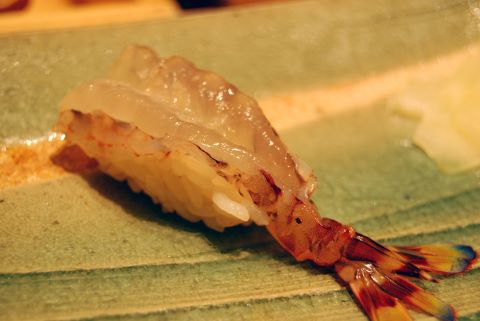
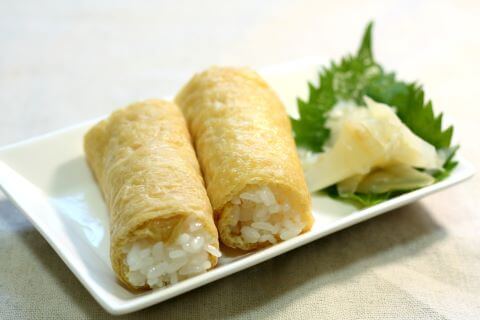 Almost all roll-type Inarizushi in Japan is made with a dried fried tofu from Kumamoto called Nankanage. Unlike normal fried tofu, it looks like paper in the shape of a sponge and does not form a bag. That’s why the only way to use it was by wrapping it around the rice. Also, this method might have emerged as a practical solution to avoid tearing the tofu while stuffing it.
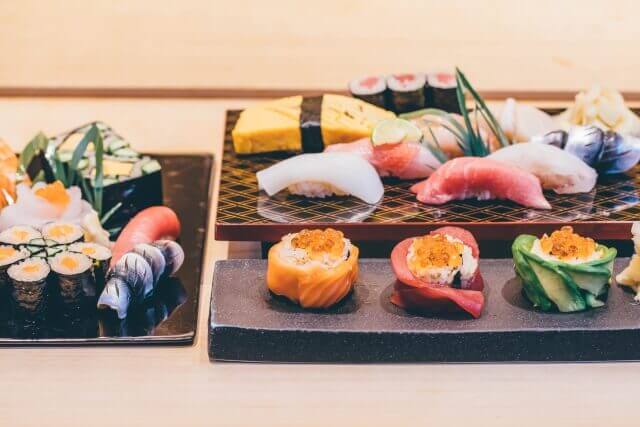 There are many things that fall under the term “sushi”.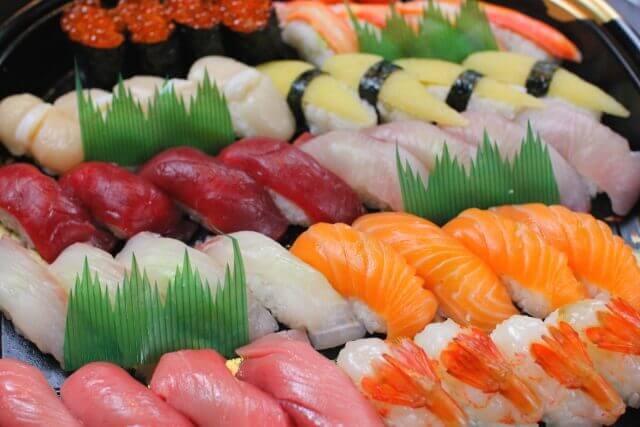
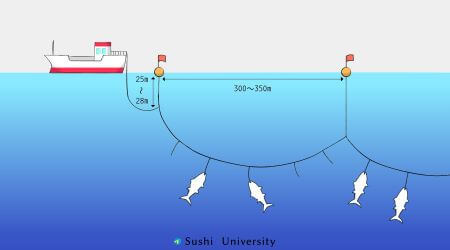 Tuna fishing methods include Purse seine fishing, Fixed-net fishing, Drift-net fishing and Longline fishing, among others. Ocean fishing for tuna in the South Pacific Ocean,
 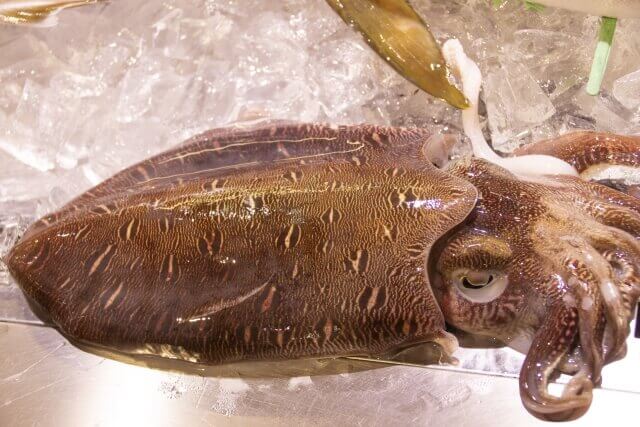 No people in the world love squid more than the Japanese. Squid ranks third in import volume behind shrimp and tuna. Squid is brought to Japan from the oceans all over the world. There are between 400 and 500 species of wild squid on Earth. Some, like the pygmy cuttlefish, are tinier than 3 millimeters while the giant squid is over 10 meters.
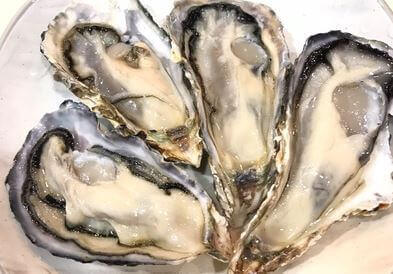 It’s won’t hurt you to eat Magaki (Japanese oyster), which has its spawning season in the summer, but in the months with no R in the name, the glycogen concentration is low, so you can’t get the full-bodied texture that you get in winter. In addition, almost all amino acids such as glutamic acid, glycine, alanine, arginine, which are important components for delicious flavor, are known to accumulate from winter through spring, and conversely, they decrease in the summer, which is the spawning season. You cannot expect the same deliciousness from oysters in summer as you can from months that contain the letter R.