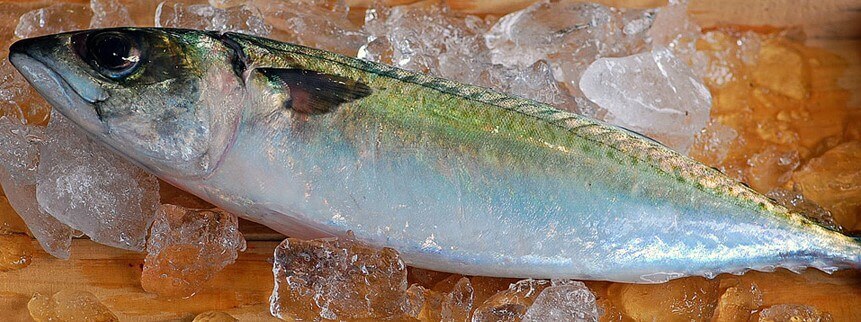
Sekisaba (関サバ) and Sekiaji (関アジ) are ‘designer’ fish known for their high prices.
Of them, Sekisaba is a premium fish that can go for as high as US $50 per fish. So, what kind of fish is Sekisaba and what’s the difference between it and normal Saba (Mackerel)?
Sekisaba is a Saba caught in the Hoyo Strait with a fishing pole by a union member of the Saganoseki branch of the Oita National Federation of Fisheries Cooperative (JF Oita). In other words, Sekisaba is not a type of Saba, but a premium fish created by differentiating the fishing method.
Sekisaba started to become known all over Japan between the late 1980s and early 1990s. Until then, Sekisaba was only known as a commonplace fish that was caught incidentally with Aji and went for US $2 per fish.
However, the Saganoseki branch of JF Oita applied for the first trademark ever in the industry and then grew the brand through methods such as tagging each individual fish by hand. This resulted in recognition of its taste as “Saba that can be enjoyed even as sashimi” (while Saba is generally a fish that loses its freshness easily and not eaten raw), catapulting it to a national constituency After that, the thorough quality management and branding paid off and the price jumped to 10 times that of normal Saba.
The first difference between Sekisaba and normal Saba is that Sekisaba is caught carefully, one at a time. The use of ground bait is also banned so that the Sekisaba won’t eat anything but the natural diet (avoiding odor). Each fisher is only allowed to use fishing lures they make from fish skin or ragworms. Fish caught in this way are let out into a live holding tank on the ship and brought to the fishing port alive. After arriving at the port, the tank on the ship is checked, the fish size is looked at from the water surface and the approximate weight is measured. This method is called “Tsurugai”. This is because when the fish is placed on a scale, it struggles violently and can injure itself. The fish are allowed to calm down in the tank (called Ikekoshi) for a day at the fishing port. At the time of shipping, Ikejime is performed, in which a knife is put into gill parts, the spinal cord is cut, and then it is submerged into saltwater and the blood is let out. After that a processing method called Shinkeijime is performed in which a wire is inserted into the spinal cord to put the fish in a state of asphyxiation. Therefore, there is little damage to the fish, maintaining the freshness. When it is transported to the place of consumption, the temperature is kept at 5°C (41°F). This is because the fish does not lose its crunchiness compared to when it is cooled to 0°C. Even this is not easy to imitate.
The Hoyo Strait where Sekisaba is caught is rich in plankton, which the Sekisaba feeds on, and the flow of the tide is fast. The reason Sekisaba meat firms well and is fatty year-round is thanks to the good environment of the sea it is raised in.
If you come across a Sekisaba that so much work has been put into, try it as sashimi, not Nigiri sushi. This is because Saba, which has a peculiarity to it, is unpopular among some people. However, Sekisaba doesn’t have this off-taste and doesn’t taste like Mackerel, so even people who don’t care for fish should be able to find it tasty.
[sc_apply url=”https://sushiuniversity.jp/apply/”]
We hope this information will be helpful.

Revision date: August 21, 2023
Share this article
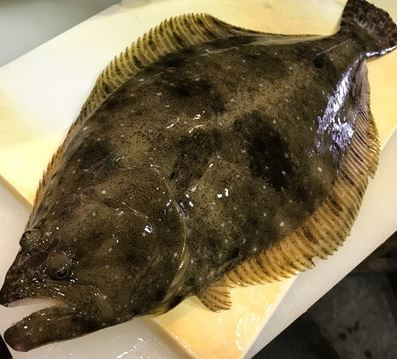 Hirame is a high-quality fish that goes for at least US $50 per kilogram. It can even exceed US $80 per kilogram, depending on the timing and the fish’s body.
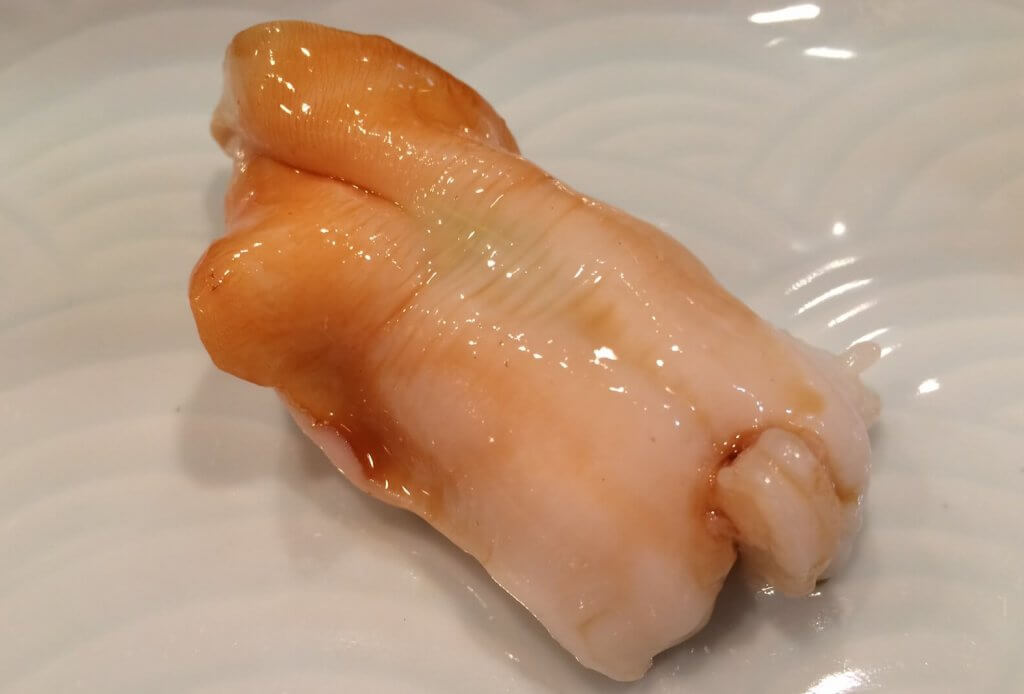 Ishigakigai is a shellfish found from Kashimanada northward, Hokkaido, from the Kuril Islands to the Aleutian Islands and even on the west coast of North America. It lives off of plankton in the shallow sandy mud bottoms of the sea at depths of about 50 meters.
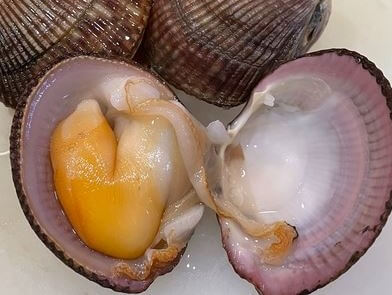 It starts to become common at the market when the Japanese rainy season ends, at the beginning of summer every year, which is around the end of the Torigai season. It then disappears from the market at the end of summer. A number of sushi restaurants start using it as a substitute for Torigai all at the same time, so Ishigakigai nigiri sushi suddenly started appearing on menus. Frankly, it is somewhat conservative as a nigiri topping but is known for the crunchy texture when biting into it. It also has strong sweetness and umami, which goes exquisitely with Shari. The sushi chef slaps the meat in his hand directly before serving to stiffen it–a way to increase the crunchy texture characteristic of shellfish. Naturally this texture is evidence of its freshness.
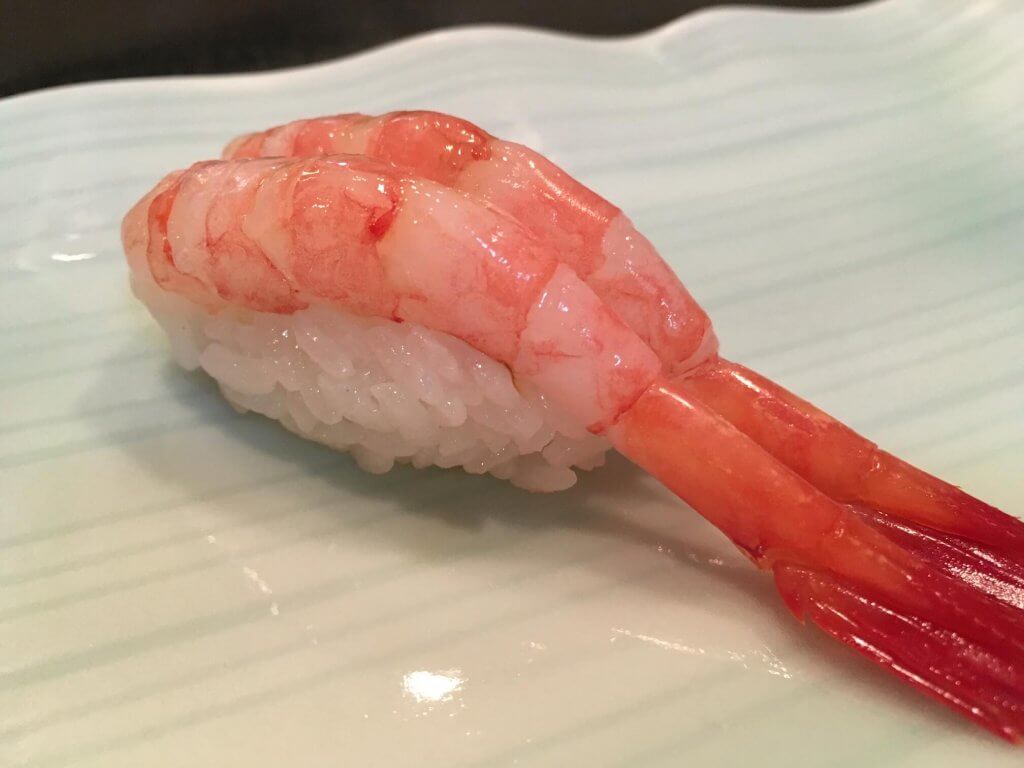 It goes without saying, that each type of fish has its very own scientific name. However, in places like the Toyosu Fish Market, there are seafoods that end up sharing a name.
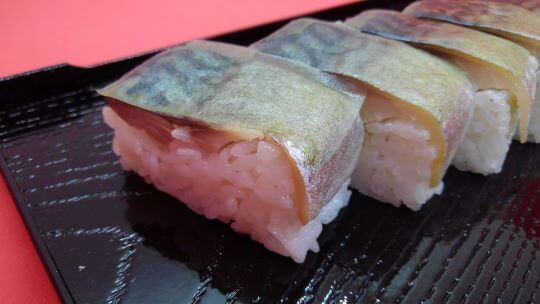 While not often seen in Tokyo, “Whole mackerel sushi” is popular in Kyoto and Osaka. This is pressed sushi made by placing vinegared
 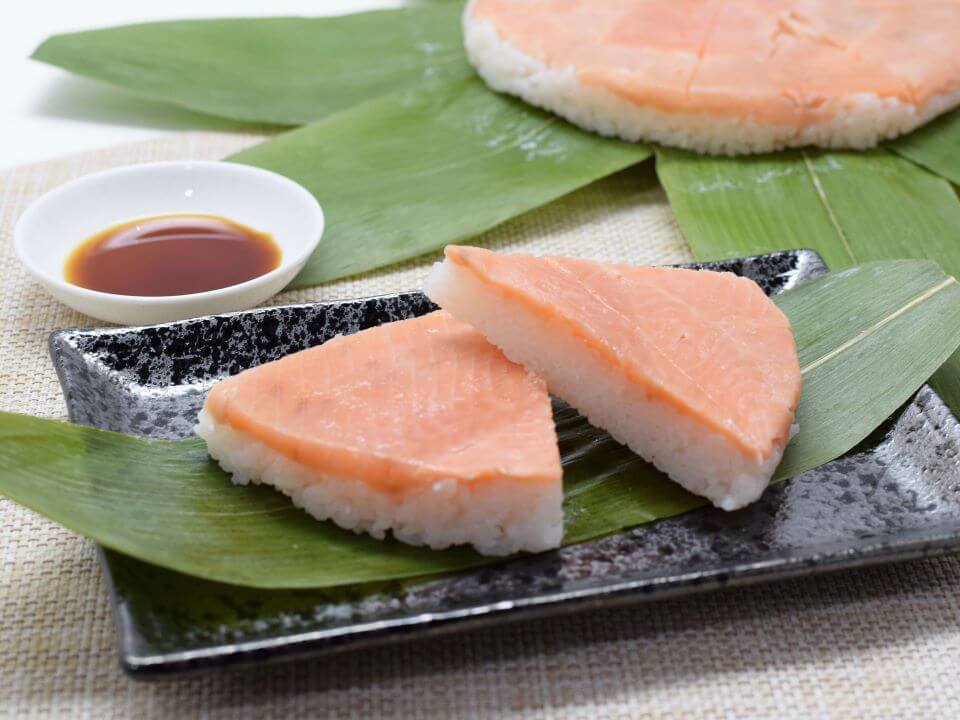 The origin of Masuzushi dates back about 300 years. Apparently, in 1717 it was first presented as Ayu narezushi (narezushi is a traditional food, said to be the original form of sushi and made from lactic fermentation of fish) to the third-generation feudal lord, Toshioki Maeda, by Shinpachi Yoshimura, a feudal retainer of Toyama who excelled in cooking skills. Toshioki liked the dish very much and assigned the role of vinegaring Ayu to Shinpachi. After that, it is said that the same narezushi was presented to the eighth shogun of the Tokugawa shogunate, Yoshimune Tokugawa, and that Yoshimune was extremely pleased with it.
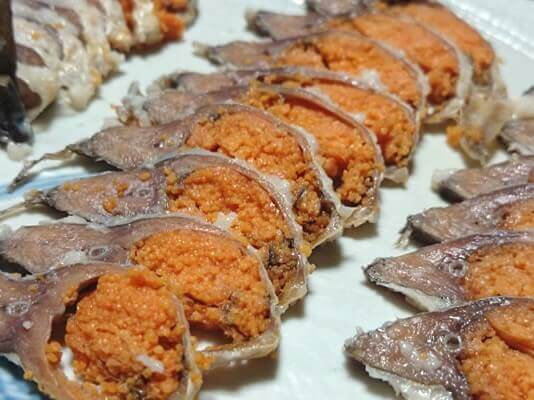 Narezushi (mainly a preserved food in which fish undergoes lactic fermentation with salt and rice), in which Sushi finds its roots, can still be found even today throughout Japan. The most famous is Funazushi (鮒寿司, 鮒鮓, 鮒寿し) in Shiga prefecture.
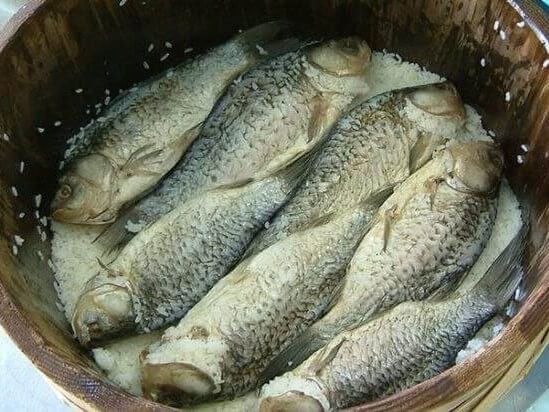 Making Funazushi sushi is surprisingly simple. The only ingredients are crucian carp caught in
 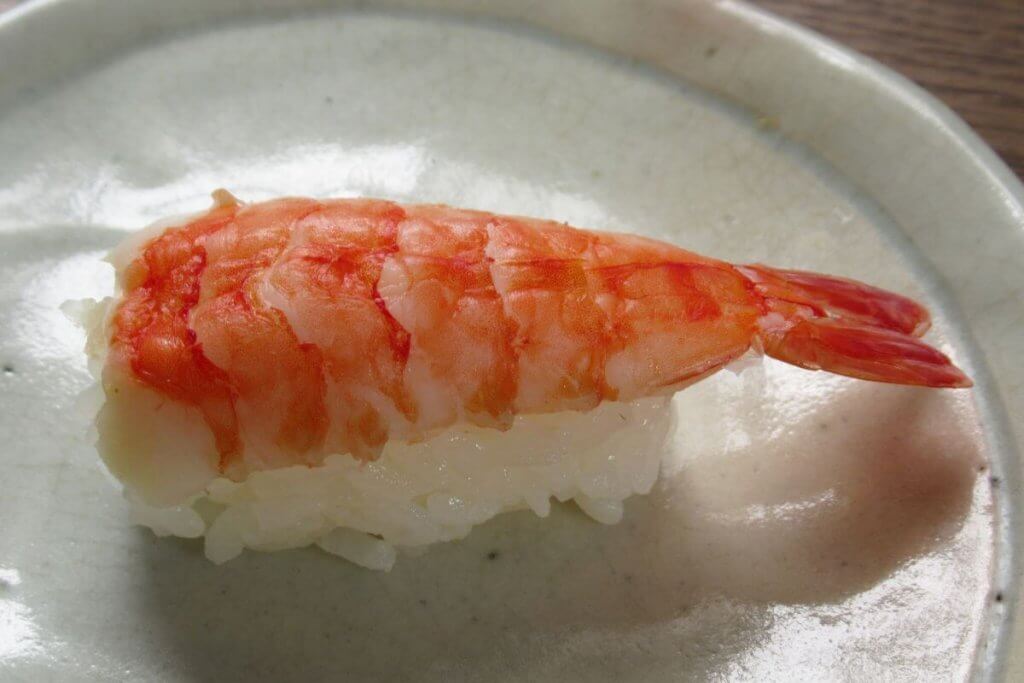 Black Tiger is in the category of the largest shrimp that is part of the Kuruma Ebi family and grows to be up to 30 cm. Black Tiger gets its name from the fact that it looks black before it is heated and has stripes like a tiger. The official name in Japan is “Ushi Ebi” but the reason is unknown. The Black Tiger is cultivated heavily in places like China, Vietnam, Indonesia, Thailand and India. It started to be imported from Taiwan in the 1980s to compensate when Japan’s shrimp consumption could no longer be covered by Kuruma Ebi. At the peak, it accounted for 40% of Japan’s shrimp imports. There is a strong impression of shrimp being imported, but small Black Tiger can actually be caught in Japan from Tokyo Bay southward.
 Travelers’ health and safety have always been our priority and today, the focus on public health and hygiene is fundamental to the recovery of our industry.
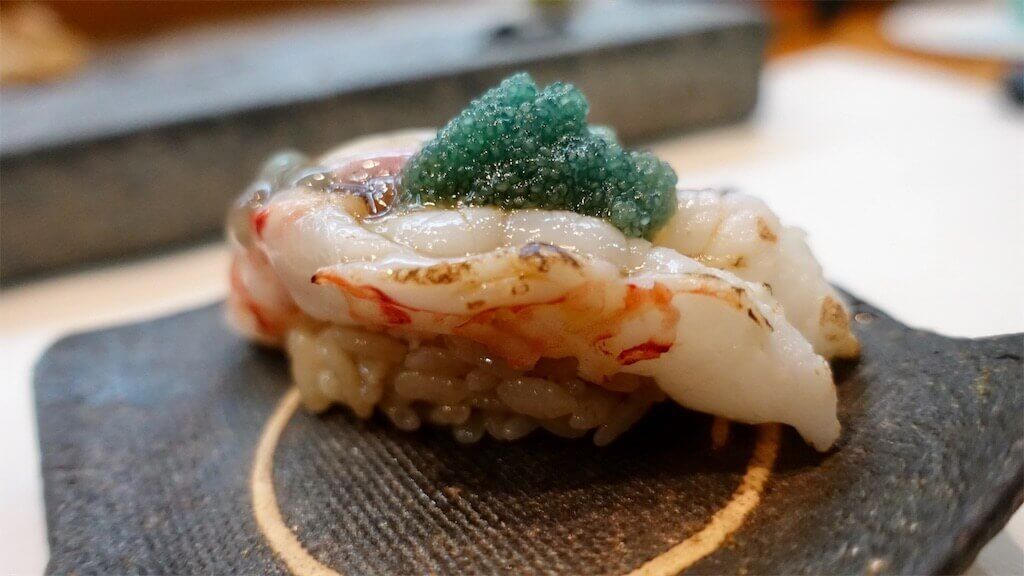 One type of shrimp that is used for nigiri sushi when still raw is Botan ebi. Needless to say, it is an extremely new addition to the Edomae sushi topping list. Interestingly, there are two types of domestic shrimp that are called Botan ebi in the Toyosu Market.
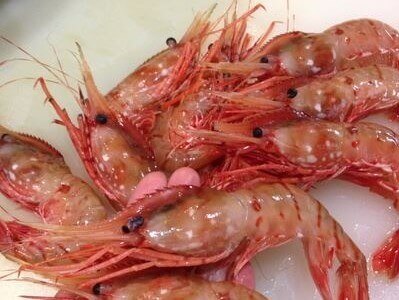 One is called by its Japanese name, Toyama ebi, with a length of 25 cm, lives in the sea at depths of 100 to 400 m, and is normally caught in Funka Bay of Hokkaido on the Japan Sea side. It actually isn’t caught in Toyama very often despite being called Toyama ebi. At the cheapest it still costs US $20 per kilogram, and in rare cases can exceed $200 per kilogram. In the Toyosu Market, it is called “Torabotan” because of the tiger stripes on the shell (“Tora” is Japanese for tiger).
 In Japanese, when a compound word is made out of two individual words, and the first consonant of the second word changes from a “clear sound” to a “fuzzy sound”, it is called “Rendaku”. For example, Edomae (江戸前) + sushi (寿司) changes to Edomaezushi (江戸前寿司). However, the correct pronunciation is only generalized among Japanese people, so in this book we chose the most commonly searched version of each compound word.
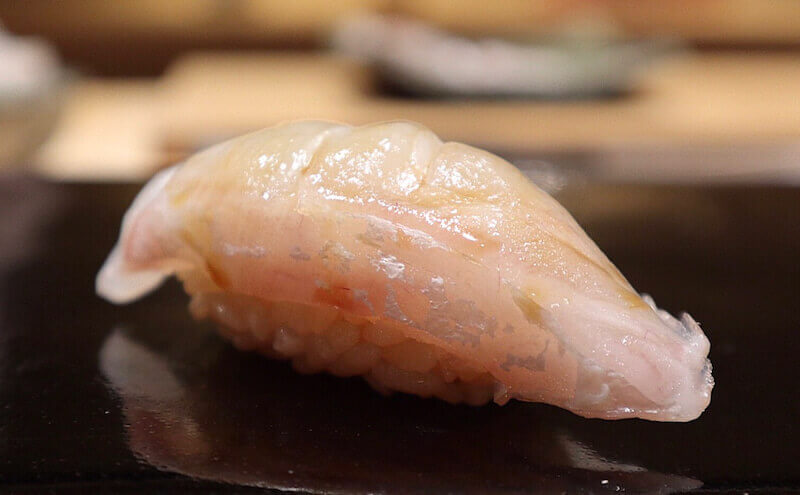 Out of the five types of Amadai that live in Japan, Aka-amadai, Shiro-amadai and Ki-amadai are the three types offered in the markets.
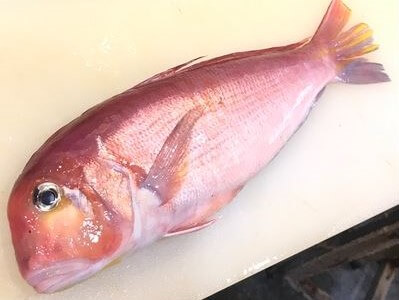 The main characteristics of Aka-amadai are its overall red body, the bright yellow color under the eyes and how part of its fin is a shiny cobalt blue color. Aka-amadai is called “
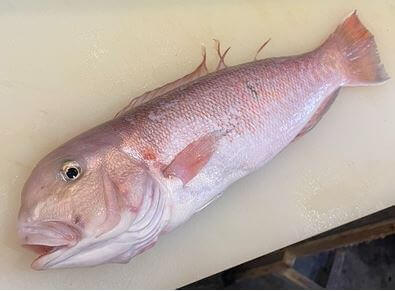 Shirakawa is considered to be the finest of the Amadai and can cost more than US $100 per kilogram. Aka-amadai costs around US $40 per kilogram. Shirakawa always ranks in the top three fish for market price. Shirakawa has more elasticity than the other two and has rich fat, making it perfect as sashimi or a sushi topping. The umami is so strong that even when served raw, the customer sometimes thinks it’s been prepared using kobujime. The fat between the meat and the skin is sweet and the skin is delicious in its own right, so it can even be eaten as sashimi with the skin left on. The famous production sites include Tsushima in Nagasaki Prefecture and Yawatahama in Ehime Prefecture. They are in season from autumn to winter. However, they say in a catch of 1,000 Amadai, you can only get one Shirakawa, so it is a rare item you won’t often see, even in a high-end sushi restaurant.