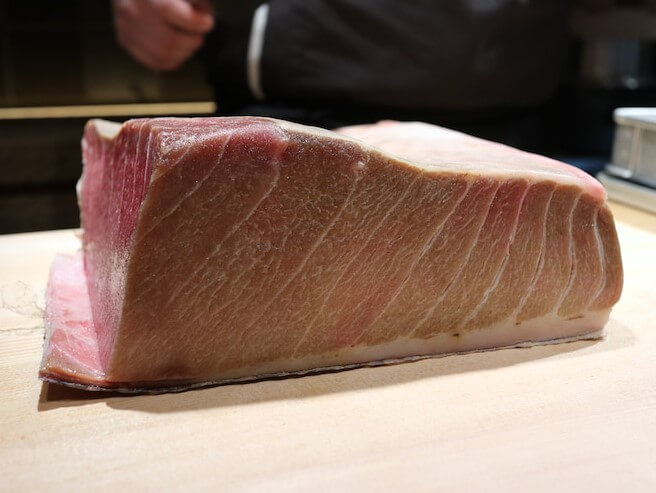
Q: What is aged (Jukusei in Japanese) sushi?
A: Aged sushi, known as jukusei sushi in Japanese, is a type of sushi made with fish that has been carefully matured over time to enhance its flavor and texture. Unlike typical fresh sushi, aged sushi undergoes a process where the fish is dry-aged, wet-aged, or fermented to develop deeper umami, tenderness, and complexity. This traditional technique has roots in Edomae (Tokyo-style) sushi culture and is considered an advanced culinary art that requires great skill and precision.
Aging times can vary from a few days to several weeks, depending on the type and fat content of the fish. When done properly, aging breaks down proteins and enhances inosinic acid—one of the key components of umami. However, aging must be carefully controlled to avoid spoilage and maintain food safety.
The fish used in sushi is generally salted or soaked in vinegar then matured for several days while the umami Inosinic acid component increases. This is called “Jukusei” (aging). Sushi made with toppings that have been aged in this way is called “Jukusei sushi”. The aging period depends on the type, individual size and origin of each fish, and some are even aged for over four weeks. However, the preparations are not only difficult and time-consuming, but the discolored parts and inedible parts must also be trimmed, so these toppings tend to be expensive. If gone too far, the Inosinic acid converts to hypoxanthine and rots. The ability to make this judgment is important. In the end, Jukusei is an evolved version of the culture of “maturing toppings” which existed in Edo-style Sushi.
How to Jukusei? (How are sushi ingredients matured?)
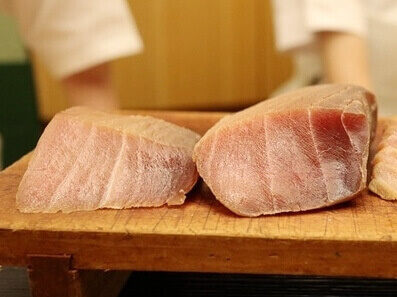 In order to mature seafood, after completing advance preparations (removing the head and internal organs then washing thoroughly; all blood must be removed), more than adequate considerations must be made for the fat content of the fish and management of the bodily fluids. Specifically, this includes processes like dry-aging at a low temperature, removing moisture using salt, utilizing enzymes and fermentation, wet aging by putting the item in a vacuum pack, and wrapping in aging sheets, which were developed thanks to Foodism. These processes may be used alone or in combination, whichever process is most suitable for the fish.
In the initial stage of ‘jukusei’ (maturing), the increase in inosinic acid (the umami component) improves the taste. After that, the inosinic acid starts to decrease, and once the long-term maturing stage (two weeks or more) starts, free amino acids such as glutamic acid and aspartic acid really start to affect the flavor. This has all been learned in research.
Let’s take a look at specific aging methods.
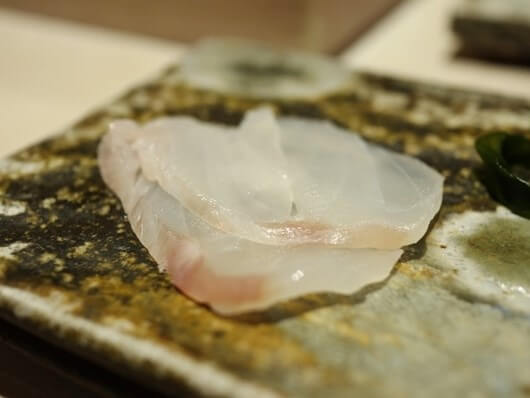
For example, for white flesh fish, a somewhat high amount of salt is sprinkled on the fish before it is stored in a refrigerator set at 3 to 4℃ with a humidity of at least 85%. The fish is not wrapped at this time. The fish is flipped over 3 to 4 times a day so that the moisture is extracted evenly. Several days later, the salt on the surface of the body and the body fluids that have seeped out is washed off with water (or thin saltwater). The fish is then wrapped in paper towels and then plastic to avoid contact with the air, and it is stored in a refrigerator at 1 to 2℃. Once the chef deems the fish is ready, it is trimmed. Excess moisture is removed and then the maturing process continues.
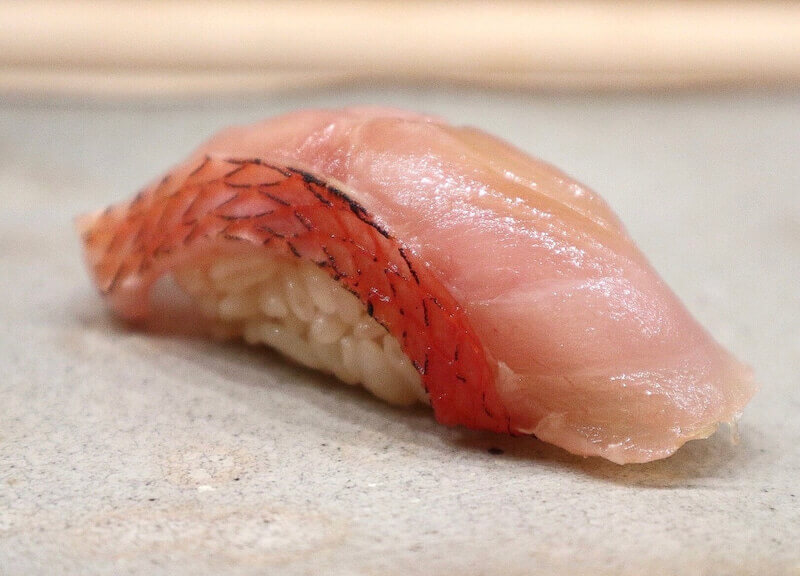
We would like to take this time to point out that fish like Tai (Red seabream) and Buri (Japanese amberjack) are clearly more delicious when matured. However, when farmed tai and farmed hamachi are matured, the scent of the feed they were raised on comes out, so these are better eaten fresh, as sashimi, instead of maturing.
Blue-backed fish like Aji (Horse mackerel) and Iwashi (Japanese sardine) are also not suitable for mature. Blue-backed fish lose their freshness quickly and judging the maturity is extremely difficult. Furthermore, if the fish is matured without sufficient advance preparations, bacteria breed in the remaining blood and organs. This may cause food poisoning.
These fish can be matured using the following method. The fish is put in salt-ice (water-cooled with ice and salt) as soon as it is caught. It is sent to the sushi restaurant in this state and left in the refrigerator to rest for several days. Unfortunately, what happens after this is apparently a trade secret.
The easiest method is to wrap in an aging sheet and put it in the refrigerator. After that the chef trims the fish, checking the state. An aging sheet is a cloth made from purely breeding a ‘mold’ that is harmless to the human body, and putting cultures of its recovered spores into the cloth. Originally, it is intended to be used to age meat, but it’s just started to be used for seafood too.
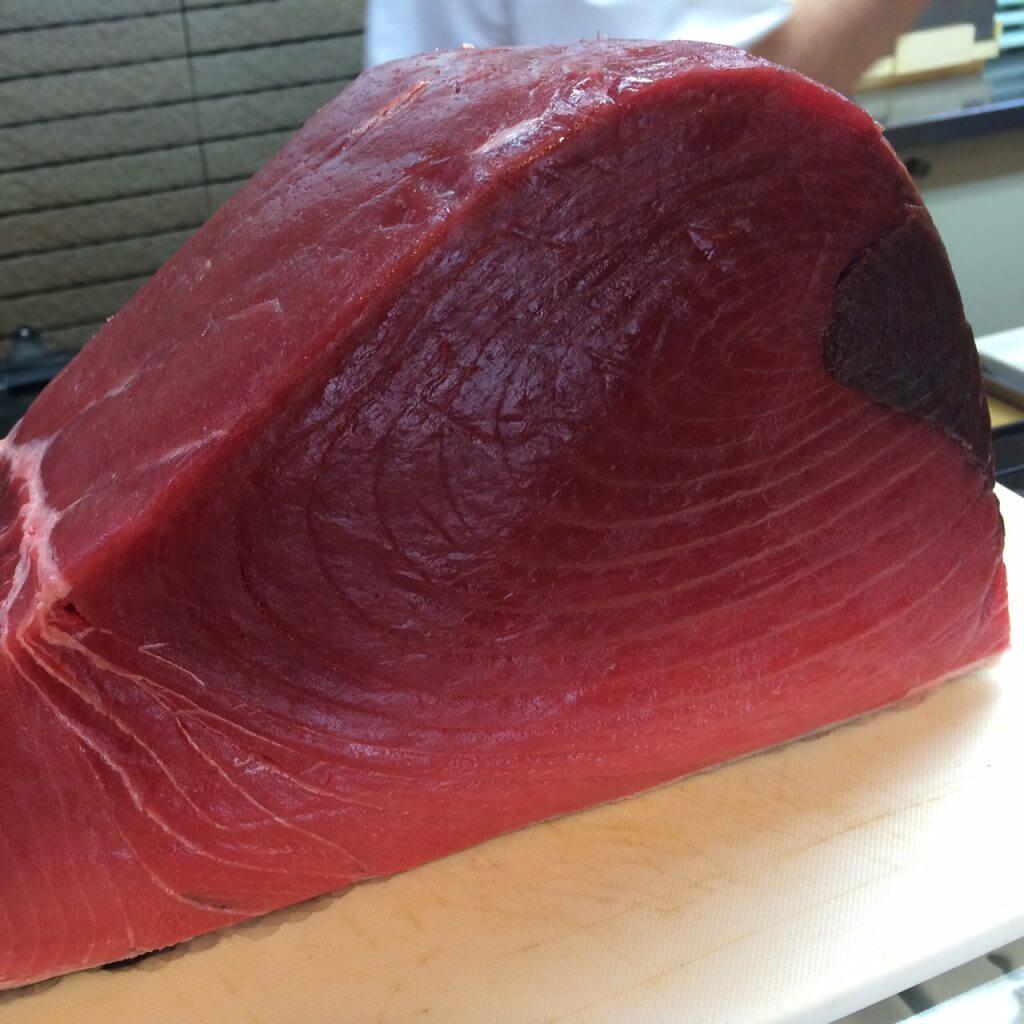
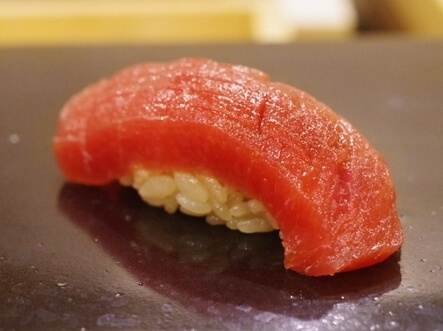
Finally, in a method used for ages by sushi chefs, the akami and toro (tuna) portion are taken out and the chiai* portion is removed to be matured. This is then wrapped in paper towels, put into a plastic bag in order to prevent drying out, then put into the refrigerator to rest. The temperature setting is the most important part of this process and, obviously, this is an industry secret. The chef needs to check the state of the tuna (for example whether the white lines are soft and whether the oil has risen), and any discolored portion is trimmed. After that it is refrigerated. This process is then repeated.
*“Chiai (血合い)” is the part with the most veins, so it is a dark red color. It has a strong odor of blood and has multiple times the acidity of the lean meat, so it is not used as a sushi topping.
Pros and Cons of Aged Sushi
✔ Pros
-
Deepened umami from inosinic and amino acids
-
Softer, melt-in-your-mouth texture
-
Elevated culinary experience and tradition rooted in Edomae sushi
-
Ideal for premium white-fleshed fish and wild-caught species
-
Reflects the skill and expertise of the chef
✘ Cons
-
Requires advanced knowledge and hygiene management
-
Risk of spoilage or foodborne illness if not aged properly
-
Some species (like blue-backed or farmed fish) are unsuitable
-
Higher cost due to trimming loss and time investment
-
Flavor may not appeal to those who prefer fresh, clean-tasting sushi
Related Content:
Technique Thursdays: Dry-Aged Fish
Everything You Need to Know About Dry-Aged Fish
[sc_apply url=”https://sushiuniversity.jp/apply/”]
We hope this information will be helpful.

Revision date: July 24, 2025
Share this article

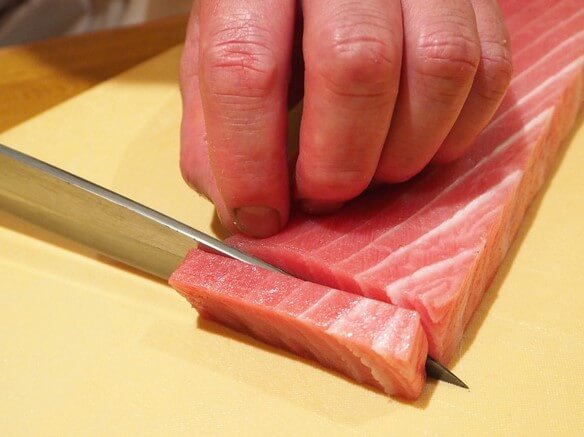
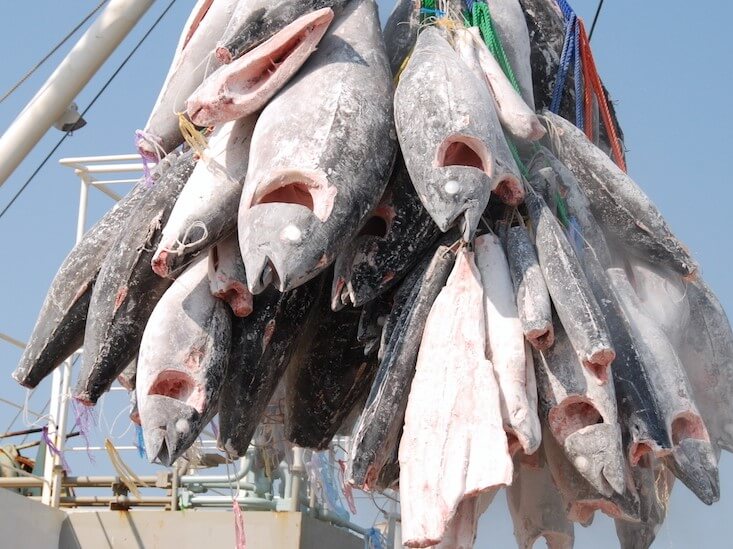 Once tuna caught in the open sea is processed by draining its blood on the ship, it is flash-frozen at ultra-low temperatures (-60℃). Ultra-low temperatures stops the enzymatic hydrolosis of protein, oxidation of fat and cultivation of microorganisms so it can be stored over a long period of time. The process can prevent discoloration for over two years and maintain a freshness worthy of being served as sashimi. Therefore, skillful sushi restaurants mature the thawed tuna in the refrigerator for about one week to attain the perfect balance of umami and change in color.
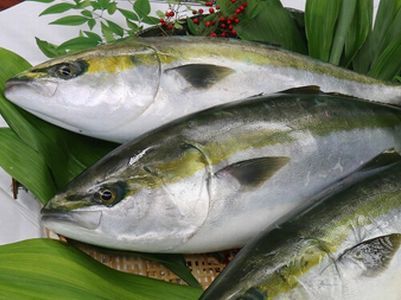 In the United States and other countries, “
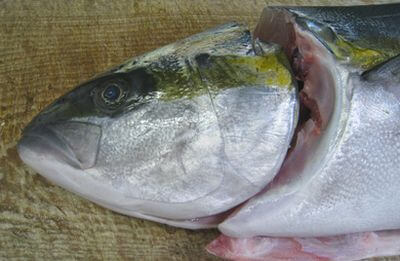 As an aside, three cousins (closely related species) of buri are often used as sushi toppings in sushi restaurants. In the Fish Name Dictionary, the translations of these cousins are Goldstriped amberjack (
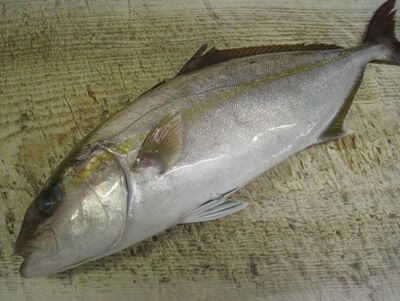 I’m sure you’re interested in the price, and while the price of the seasonal winter buri varies, it is generally around $10-20 per kilogram. Since there is very little distribution of hiramasa, the price is said to be about double that of buri. The price of
  Why is only tuna brought into certain ports high-priced, even though all of the tuna is caught in the seas near Japan? This is because the level of stress caused to the fish when it is caught has a huge impact on the quality, including taste, color and texture. In other words, the same fish may be delicious or taste unpleasant depending on how the fisher handles the fish directly after catching it. Naturally, everyone ends up wanting the fish from the ports with fisherman who are skilled in this practice*. Furthermore, it is individuals who process the fish. The quality changes drastically depending on who caught it.
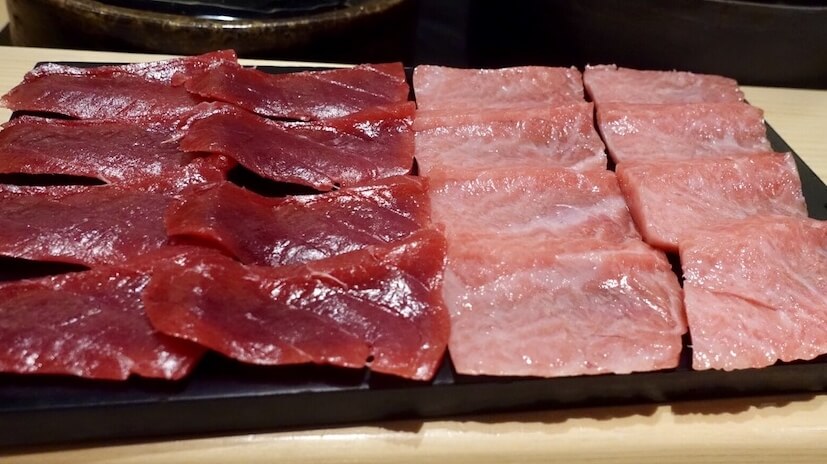 However, sushi chefs will remove the topping from the refrigerator and leave it standing out for a while (in the case of tuna, the fat will melt at around 23℃). They do this because if the topping is cold, it becomes difficult to taste the essential nature of the fish. The temperature of the shari is best at human skin temperature (around 36℃) to maximize the taste and sweetness of the rice. However, the ideal temperature differs very slightly depending on the topping.
 No one is more sensitive to the changing of the seasons than sushi lovers. This must be because the taste of sushi toppings is directly tied to the seasons. There are terms to describe this such as Hashiri (early season), Sakari (in-season), and Nagori (late season). In Japanese culinary tradition, these three terms capture the evolving flavors of seasonal ingredients. Recognizing where a sushi topping stands within this cycle allows diners to appreciate not just its taste, but its fleeting character.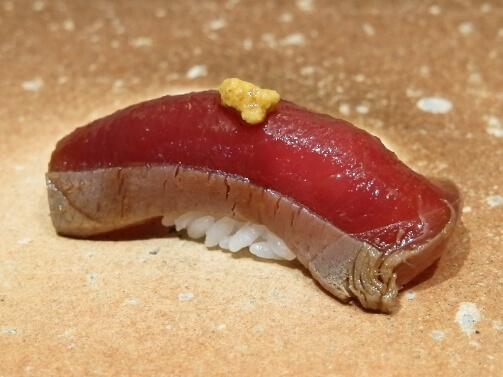
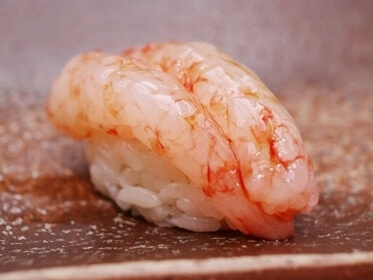 Fish seasons are categorized as the ‘catch season’ and the ‘flavor season’. The ‘catch season’ is the time when lots of fish can be caught and are cheap. Take
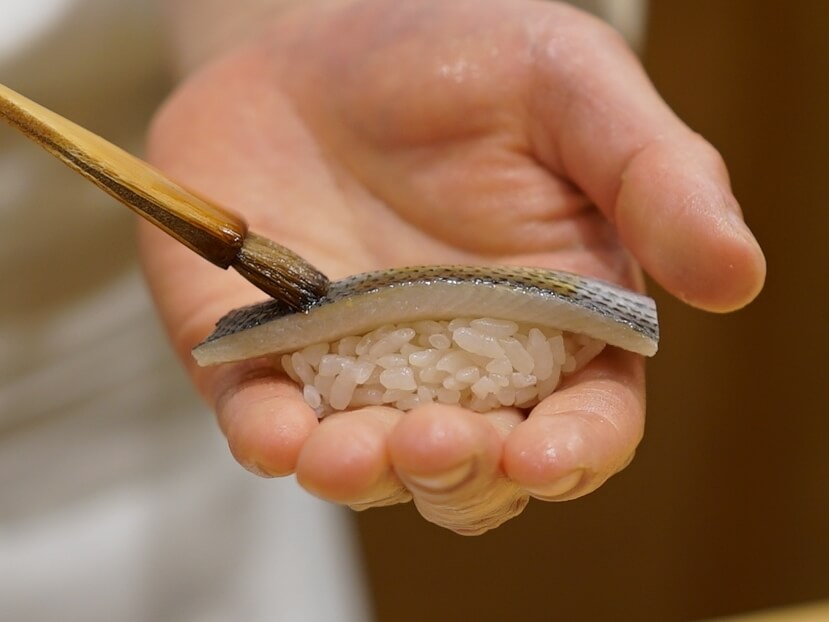 At high-class restaurants, the minimum required nikiri soy sauce is brushed on to the piece, but at restaurants frequented by the general public, customers dip their sushi in as much sauce (soy sauce that includes chemical seasonings) as they like. In fact, there is a gimmick here. The high-class restaurant provides an opportunity for their customers to eat sushi toppings in the most delicious state possible, but the restaurants for the general population allow customers to eat casually with sauce, a daily necessity. This changes how topping ingredients are selected. If the sushi is going to be dunked into the soy sauce, then the topping must have an appropriate fat content that won’t be overpowered by the soy sauce. Therefore, instead of a coastal tuna, a farm-fattened tuna with oily fat is preferred. It is often said that farm-fattened products are too rich, but it is also said that they have an impact that isn’t overpowered by the sauce they are enjoyed with.
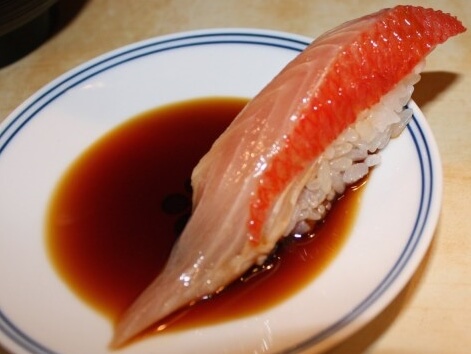 There is a sensor on the tongue that feels the degree of saltiness. This prevents us from eating too much of things that are extremely salty. Chemical seasonings confuse that sensor. The chemical seasoning palliates the degree of saltiness felt by the tongue. Even if you were to, for example, dunk your sushi into the soy sauce and chemical seasoning mixture, it won’t feel salty. If you eat sushi with the sauce, you can take in a high volume of sodium, which is a pleasure trigger for the human body, without feeling the saltiness on your tongue. In other words, it may be more accurate to say that with commoner sushi, you actually drink the sauce, not dip into it.
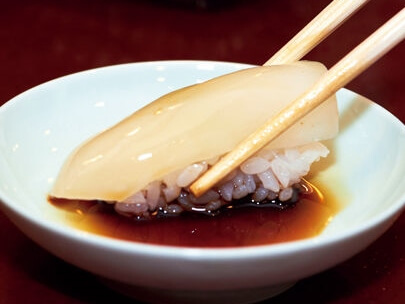 The difference between common people who eat this sauce and foodies is a delicate nose, meaning their sense of smell. This sense is acquired through childhood experiences and repetition after becoming an adult. Tasting through sense of smell is a person’s food culture. The reason that the so-called celebrities, or the upper class made through business success, don’t have an appreciation for high-class sushi restaurants is because they don’t have this culture of distinguishing by smell, or the culture of feeling the seasons. Also, in order to target the upper-middle class clientele, it is important to use strong flavors and give a performance that is easy to understand, while worrying about details is not necessary. That is why the obvious show of using a burner for searing is popular.
 Natural fish are part of the food chain and have concentrations of harmful substances. Since 2000 the amount of mercury found in fish has become an issue. The American Natural Resources Defense Council has said tuna is a fish that should be avoided if pregnant or planning to get pregnant. A more recent problem is the large amounts of micro plastics found in fish meat. This shocking phenomenon will likely be reported by research organizations at some point in time. If it does reach that extreme, then it will be better to avoid the danger of eating fish.